







Web
Applications
Custom
Complete Guide to Web Development for Businesses


sachin pokharel
20 Feb 2026
Web development is the backbone of a strong online presence, involving designing and building websites and web applications that are fast, secure, and user-friendly, ensuring a seamless experience for visitors. Whether you’re creating a business website, an e-commerce store, or a custom web platform, having a clear understanding of frontend, backend, and full-stack development is crucial, as each layer affects how your website looks, functions, and scales over time.
This comprehensive AITC International guide explores web development, essential programming languages, the role of websites in driving business growth, and how to choose the right web development company to ensure long-term digital success. Let’s dive in and build a foundation for a high-performing online presence.
What is Web Development?
Web development is the comprehensive process of building, deploying, and maintaining websites and web applications that operate across the internet. It includes the creation of static web pages, dynamic websites, e-commerce platforms, social networks, content management systems (CMS), and cloud-based applications.
Web development integrates front-end technologies, including HTML, CSS, JavaScript, and responsive design, which shape the user interface (UI) and user experience (UX). It also integrates back-end technologies, such as server-side programming, databases, APIs, and application logic, which ensure functionality, scalability, and security.
By combining front-end and back-end systems, web development enables websites and web applications to deliver structured content, interactive features, secure data processing, and scalable performance across digital environments.
Key Aspects of Web Development
Web development is a multi-layered discipline that combines programming, system architecture, user experience, and performance engineering. Each layer plays a critical role in building secure, scalable, and search-engine-friendly websites and web applications. Below are the core aspects that define professional web development.
1. Front-End Development (Client-Side Architecture)
Front-end development focuses on the visual interface and user interaction layer of a website. It uses HTML to provide structure, CSS to provide styling, and JavaScript to enable interactivity. Together, these technologies create responsive, accessible, and mobile-friendly designs that improve the overall user experience.
Modern front-end frameworks, including React, Angular, and Vue, enhance performance and support component-based architecture, allowing developers to build scalable and maintainable interfaces. A well-developed front end improves usability, engagement metrics, and Core Web Vitals, and these performance indicators directly influence search rankings and overall digital visibility.
2. Back-End Development (Server-Side Logic)
Back-end development manages databases, servers, and application logic, forming the foundation of server-side functionality. It ensures that user requests are processed securely and that data is stored and retrieved efficiently. Technologies such as Node.js, PHP, Python, Ruby, Java, and .NET are widely used in back-end development, while databases like MySQL, PostgreSQL, and MongoDB support structured and unstructured data management.
Together, these back-end technologies and databases power dynamic content and enable application workflows that respond to real-time user interactions. A strong back-end architecture supports scalability and security and enables seamless integration with APIs and third-party services, ensuring stable, high-performance web applications across digital environments.
3. Full-Stack Development
Full-stack development integrates both front-end technologies and back-end technologies, creating a unified development architecture. This approach ensures cohesive communication between the user interface and server-side infrastructure, which improves overall system efficiency and application performance. By connecting client-side design with server-side logic, full-stack development reduces technical conflicts and accelerates deployment cycles.
As a holistic development model, full-stack architecture streamlines workflows, enhances cross-layer compatibility, and supports scalable web applications that operate efficiently across digital environments.
4. Database Management and Data Architecture
Databases store both structured and unstructured data, which are essential for website functionality. Proper schema design, indexing, normalization, and query optimization ensure fast data retrieval and minimal latency, improving overall system performance. Efficient database management directly enhances website speed, supports system stability, and improves user experience, making it a critical component of robust and reliable web applications.
5. Web Application Security
Web application security is a foundational aspect of web development. Implementing HTTPS (SSL/TLS encryption), secure authentication systems, input validation, firewalls, and protection against vulnerabilities such as SQL injection and cross-site scripting (XSS) safeguards user data. Because search engines prioritize secure websites, strong web application security serves as both a technical requirement and a ranking factor for search engine optimization (SEO).
6. Responsive and Mobile-First Development
Responsive and mobile-first development ensures that websites function seamlessly across smartphones, tablets, and desktops. Responsive design provides adaptive layouts, optimized media, and fast mobile loading times to create a smooth user experience. Mobile usability directly affects both user satisfaction and search engine rankings, making it a critical factor in modern web development and SEO strategy.
7. API Integration and Third-Party Services
Modern websites rely on APIs to connect with payment gateways, social media platforms, CRM systems, and cloud services. Technologies such as RESTful APIs and GraphQL enable structured communication between applications, which enhances both functionality and scalability. By integrating APIs and third-party services, websites can deliver richer features, improve workflow efficiency, and scale seamlessly across diverse digital environments.
8. DevOps and Deployment
Deployment processes involve version control systems (e.g., Git), continuous integration/continuous deployment (CI/CD), cloud hosting, and server management. Implementing efficient DevOps practices ensures faster releases, reduced downtime, and improved reliability, allowing development teams to maintain stable, high-performing applications while accelerating the delivery of new features.
Why Web Development Is Crucial for Businesses in 2026 and Beyond
Strengthen your digital foundation by enhancing UX with AI and Progressive Web Apps (PWAs), integrating emerging technologies, optimizing for mobile devices, boosting SEO, accelerating e-commerce performance, and ensuring security and compliance. A future-proofed digital foundation drives user engagement, increases conversions, and supports long-term business growth in 2026 and beyond.
1. Establish a Strong Digital Foundation
A website remains the primary touchpoint for customers, and modern businesses require dynamic, interactive web platforms rather than static pages. A well-engineered website acts as the central hub for marketing, customer engagement, and data collection. Companies that invest in optimized web infrastructure see 2–3x higher conversion rates, which result from improved UX, faster load times, and reliable uptime.
2. Enhance User Experience (UX)
User experience (UX) is a core ranking factor in Google’s Page Experience update, and web development in 2026 focuses on highly personalized, data-driven interfaces that respond in real time to user behavior. Leveraging AI-driven personalization can increase user retention by over 30%. Technologies like Progressive Web Apps (PWAs) and responsive design ensure seamless experiences across devices, delivering consistent, engaging, and high-performing digital interactions.
3. Integrate Emerging Technologies
AI, AR/VR, and blockchain are used to create immersive, secure, and intelligent web applications that elevate engagement and boost operational efficiency. Companies that adopt AR/VR and AI early gain a competitive edge in customer interaction and enhance operational scalability, enabling richer experiences and smarter business operations.
4. Optimize for Mobile and PWAs
Mobile-first development is prioritized in modern web development, and Progressive Web Apps (PWAs) provide fast, offline-capable, and cross-platform functionality. Businesses that use PWAs report 50% faster loading times and higher engagement, compared to traditional mobile websites, delivering a seamless and high-performing user experience across devices.
5. Boost SEO and Semantic Visibility
Implementing semantic HTML, structured data, and advanced metadata improves search engine rankings, enhances feature snippet eligibility, and increases organic traffic. Semantic SEO ensures better indexing by Google and enhances discoverability across AI-powered search, making content more visible, authoritative, and optimized for modern search technologies.
6. Accelerate E-Commerce Growth
Scalable e-commerce platforms are built with secure payment gateways, AI-based product recommendations, and optimized checkout processes to maximize conversions. Implementing optimized web infrastructure can increase e-commerce conversion rates by 35%, helping businesses deliver seamless shopping experiences while driving higher revenue and customer satisfaction.
7. Ensure Security and Compliance
Implementing secure coding, SSL encryption, privacy regulation compliance (GDPR/CCPA), and real-time threat monitoring protects user data and business reputation. Proactive security measures also prevent costly breaches and safeguard trust, ensuring that businesses remain compliant, secure, and reliable in today’s digital environment.
8. Future-Proof Digital Infrastructure
Websites are designed for adaptability, integrating AI interfaces, IoT solutions, voice search, and evolving web technologies to maintain competitiveness. Future-ready web architecture ensures long-term scalability and operational efficiency, allowing businesses to stay agile and prepared for technological advancements.
Web Development vs Web Design vs Software Development
Web Design focuses on visual layout, user interface (UI), and user experience (UX) to create visually appealing and intuitive websites. Web Development builds functional websites using front-end and back-end code, ensuring that designs are interactive and operational. Software Development covers broader applications, including desktop, mobile, and system software, and handles the full software lifecycle, from planning to deployment, providing end-to-end solutions across digital platforms.
| Aspect | Web Design | Web Development | Software Development |
| Primary Focus | Visual aesthetics, user interface (UI), and user experience (UX) | Functional implementation of websites and web applications | Building software solutions across multiple platforms (desktop, mobile, embedded systems) |
| Scope | Design layouts, color schemes, typography, and interactive mockups | Coding front-end (HTML, CSS, JavaScript) and backend (Python, PHP, Node.js, Ruby, Java, C#) functionality | Full software lifecycle: planning, coding, testing, deployment, and maintenance of applications |
| Key Responsibilities | Create wireframes, prototypes, responsive UI, and interactive experiences | Develop responsive websites, implement server logic, integrate databases, ensure performance and security | Build desktop apps, mobile apps, operating systems, system software, and enterprise applications |
| Tools & Technologies | Figma, Adobe XD, Sketch, Canva, InVision | HTML, CSS, JavaScript, Python, PHP, Node.js, Ruby, Java, C#, databases | IDEs (Visual Studio, Eclipse), version control (Git), programming languages (C++, Java, Python, Swift, Kotlin), CI/CD tools |
| Output Examples | Website mockups, UI prototypes, interactive landing pages | Dynamic websites, e-commerce platforms, web applications, APIs | Desktop applications, mobile apps, ERP systems, operating systems, embedded firmware |
| Required Skills | Graphic design, UX/UI design, color theory, typography, prototyping | Frontend & backend programming, databases, API integration, debugging, security best practices | Software architecture, multi-language programming, algorithms, data structures, system design, testing & deployment |
| Target Users | Website visitors, end-users interacting with UI | Businesses needing functional websites or web apps | Organizations or individuals requiring software solutions for specific platforms or systems |
How Do I Build a Business Website That Attracts Customers?
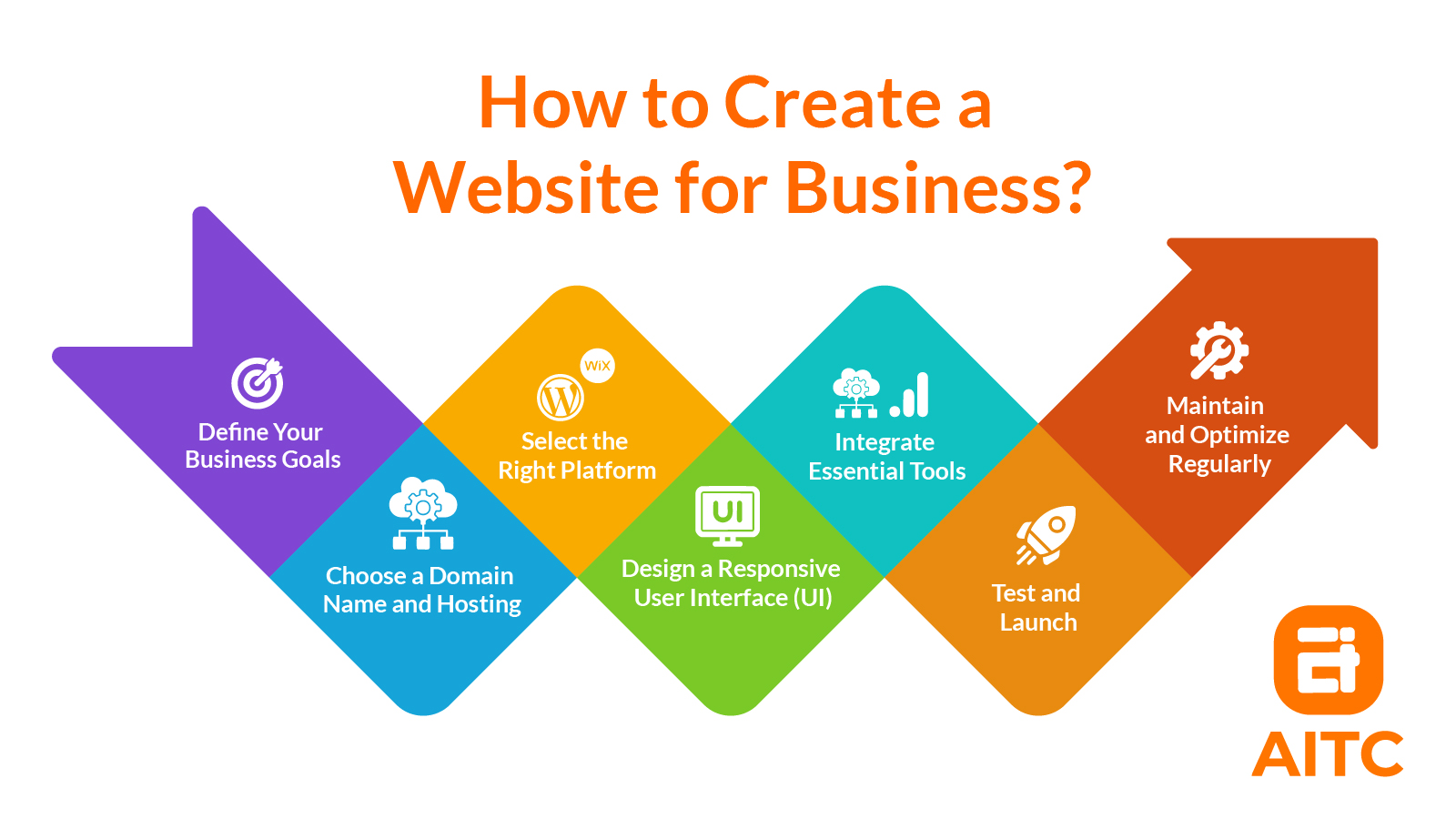
To build a successful business website, define clear goals, choose a brand-aligned domain and reliable hosting, select the right platform, design a responsive UI/UX, integrate essential tools, test thoroughly and launch securely, and maintain it regularly. A well-executed website attracts customers, boosts engagement, and drives business growth.
Here’s a step-by-step expert guide to building a website that delivers results:
1. Define Clear Business Goals
Defining clear business goals starts with identifying your target audience, core offerings, and primary objectives. Determine whether your website’s focus is on lead generation, online sales, bookings, or brand awareness. Establishing clear goals helps inform design, content strategy, and functionality, ensuring that your website aligns with measurable business outcomes and delivers tangible business results.
2. Choose a Brand-Aligned Domain and Reliable Hosting
Select a domain name that reflects your brand identity and is easy to remember. Pair it with a trusted web hosting provider like Bluehost, SiteGround, or GoDaddy, which ensures fast load times, guarantees uptime reliability, and provides scalable infrastructure. This combination keeps your website secure, maintains responsiveness, and optimizes it for both users and search engines.
3. Select the Right Website Platform
Choose a website platform that aligns with your business needs. For content-driven sites that require flexible customization, WordPress is an ideal choice. For rapid deployment and user-friendly design, platforms like Wix or Squarespace work best. If your business needs e-commerce functionality, complex workflows, or tailored interactive features, custom development by a professional web development company is recommended. Your platform choice directly affects performance, scalability, SEO optimization, and long-term maintainability.
4. Design a Responsive, User-Centric Interface (UI/UX)
Focus on UI/UX design that prioritizes mobile-first design, intuitive navigation, and fast-loading pages. A well-designed UI/UX improves user engagement, reduces bounce rates, and signals quality to search engines. Emphasize visual hierarchy, accessibility, and interactive elements to create a seamless experience across desktops, tablets, and smartphones.
5. Integrate Essential Tools and Functionalities
Equip your website with essential tools that streamline operations and enhance customer interaction. Include contact forms and live chat to enable instant communication, CRM integration to manage leads and customer data, Google Analytics to gain data-driven insights, and payment gateways to ensure secure e-commerce transactions. Integrating these tools ensures your website is fully functional, measurable, and optimized for conversions.
6. Test Thoroughly and Launch Securely
Before going live, perform cross-browser and device testing to ensure consistency across all platforms. Implement HTTPS and robust security measures to protect user data. Deploy your website via your hosting provider, making sure that all functionalities, analytics, and integrations work seamlessly.
7. Maintain and Optimize Regularly
A successful business website is never static. Regularly update content, monitor site performance, optimize page speed, fix bugs, and enhance SEO to ensure continuous improvement. This approach sustains long-term rankings, maintains a positive user experience, and supports ongoing business growth.
Creating a professional website for your business is a critical step to establish a strong online presence, attract targeted customers, and drive sustainable growth. A well-structured website not only showcases your brand but also acts as a hub for marketing, lead generation, and customer engagement.
How to Choose the Best Web Development Company?
Selecting company that combines technical expertise, strategic design, and SEO knowledge ensures that your website not only looks great but also performs effectively across devices and search engines.
Review the Company Portfolio
A company’s portfolio is a key indicator of its expertise. Examine past projects to evaluate design versatility, assess technical proficiency, and consider experience in your industry. Look for evidence of responsive websites, custom web applications, or e-commerce solutions. A robust portfolio demonstrates the ability to handle complex projects and ensures high-quality execution.
Read Client Testimonials and Reviews
Client feedback provides valuable insight into a company’s professionalism, reliability, and ability to meet deadlines. Prioritize agencies with verified reviews on platforms like Clutch, Google My Business, or LinkedIn. Pay attention to recurring praise or complaints regarding communication, project management, or post-launch support, as these factors significantly impact project success.
Evaluate Technical Expertise
Ensure the company has strong full-stack development skills, including HTML5, CSS3, JavaScript, React.js, Node.js, and other modern frameworks. Check for experience with CMS platforms such as WordPress, Drupal, or Shopify, depending on your project needs. Additionally, confirm that the company follows best coding practices and maintains scalable, secure, and maintainable code.
Assess Understanding of UI/UX and SEO
A technically sound website is ineffective without user-centric design and search engine optimization (SEO). The agency should demonstrate expertise in UI/UX best practices, ensuring intuitive navigation, fast-loading pages, and mobile responsiveness. Their SEO knowledge should cover on-page optimization, structured data, meta tags, and site architecture, enabling higher search visibility and better conversion rates.
Check Communication and Support
Smooth communication is essential for project efficiency. Choose a company that provides transparent project updates, dedicated project managers, and collaborative tools. Ensure they also offer reliable post-launch support and maintenance to handle updates, bug fixes, and scalability requirements.
Consider Pricing and Value
While cost is important, focus on value over price. Compare multiple quotes to understand what’s included, such as design services, development services, testing, and SEO optimization. Avoid agencies that charge hidden fees or offer unrealistically low prices, as these can often compromise quality.
Align With Your Business Goals
The ideal web development partner or digital agency should understand your industry, target audience, and long-term business objectives. They should provide tailored solutions, whether it’s building an e-commerce platform, a corporate website, or a custom web application, ensuring your digital presence drives measurable growth.
Key Takeaways
- Web development is essential for building dynamic, secure, and scalable online platforms that drive business growth.
- It includes frontend, backend, and full-stack development—each playing a vital role in website functionality and user experience.
- Choosing the right technologies (HTML, CSS, JavaScript, Python, Node.js, etc.) is key to developing modern, responsive websites.
- A well-built website improves SEO, enhances user engagement, builds credibility, and supports your business goals.
- To create a successful business website, focus on clear goals, professional design, tool integration, and ongoing optimization.
- When selecting a web development company, consider their portfolio, technical expertise, communication, and value for investment.
Frequently Asked Questions (FAQs) About Web Development
1. What is web development, and why is it important for businesses?
Web development is the process of designing, building, and maintaining websites and web applications. For businesses, it’s essential because a professionally developed website enhances online visibility, strengthens brand credibility, drives customer engagement, and supports marketing strategies 24/7. A well-structured website also acts as a central hub for business operations, including e-commerce, lead generation, and customer support.
2. What are the main types of web development?
Web development is generally categorized into three main types:
- Frontend Development: Focuses on the user interface (UI), ensuring the website is visually appealing, responsive, and user-friendly using technologies like HTML, CSS, and JavaScript.
- Backend Development: Handles server-side logic, databases, and application functionality, using languages like Python, PHP, Node.js, or Ruby.
- Full-Stack Development: Combines both frontend and backend skills, allowing developers to build complete, scalable web solutions.
3. How does a website improve business SEO?
A professionally developed website boosts SEO through:
- Fast page loading speed for better user experience and lower bounce rates.
- Mobile-friendly design for compatibility across devices.
- Clean, structured code with proper HTML tags, headings, and metadata.
- Optimized content and internal linking, enhancing search engine rankings.
By integrating SEO best practices into web development, businesses can significantly increase online visibility and attract qualified traffic.
4. Why should a business invest in a custom-built website instead of using a template?
Custom-built websites are tailored to the specific needs and goals of a business, providing:
- Scalability to grow with your business.
- Enhanced security compared to generic templates.
- Improved SEO performance through optimized site architecture.
- Full control over functionality, such as e-commerce systems, booking platforms, and content management.
This level of customization ensures a professional digital presence that aligns with business objectives.
5. What is the difference between a static and a dynamic web page?
- Static Web Page: Displays fixed content that only changes through manual updates. Ideal for simple informational sites, these pages load quickly but have limited functionality.
- Dynamic Web Page: Generates content in real-time by interacting with databases or user inputs. Perfect for e-commerce platforms, blogs, membership sites, and applications requiring frequent updates.
6. How often should a business update its website?
Regular website updates are critical for maintaining performance, security, and relevance. Businesses should:
- Refresh content to engage visitors and improve SEO rankings.
- Fix bugs and address technical issues.
- Update design, features, and functionalities to align with evolving industry standards.
- Ensure compatibility with the latest devices and browsers.
Consistent updates reinforce credibility, enhance user experience, and strengthen search engine performance.

Related insights

How IoT is Shaping Smart Businesses
19 Dec 2025

A Beginner’s Guide to Building Scalable Web Applications
11 Mar 2026

How to Register .NP Domain in Nepal for Free – Step-by-Step Guide
28 Nov 2025
Have a project in mind? Let's build something great.
Share your ideas or questions and our experts will get back to you shortly.
Unlock Expert Guidance
Need expert IT advice? Our seasoned professionals are here to help you navigate your tech challenges. Schedule a session with us and get personalized solutions tailored to your business needs.

Connect with Us and Let's Build Something Together
We'd love to hear from you! Whether you have questions, need support, or want to discuss a new project, our team is ready to assist. Fill out the form below, and we’ll get back to you as soon as possible.
Prefer a Direct Consultation?
Connect with our team for a 1-on-1 virtual session to discuss your project, understand your needs, and explore the right solution for your business.
What's Next?
- 1Connect with you at a convenient time
- 2Explore your needs, goals, and requirements
- 3Prepare a tailored proposal based on your needs
Why Choose Us
Connect with AITC
Select your inquiry type to route your request to the right department.
Our Office Locations
Operating across 3 key timezone hubs to serve global enterprise clients.