







SEO
Digital Marketing
How Bounce Rate Impacts SEO & Web Performance?


sachin pokharel
19 Feb 2026
Bounce rate is a core metric in Google Analytics, web analytics platforms, and digital marketing performance measurement. It represents the percentage of users who land on a webpage and leave without triggering any measurable interaction, such as a click, form submission, or page navigation. A high bounce rate often signals a mismatch between search intent, page content, and user expectations.
For businesses and website owners, bounce rate directly influences user engagement metrics, conversion rate optimization (CRO), and overall SEO performance. While bounce rate is not a direct Google ranking factor, it reflects behavioral signals such as engagement and content relevance, which impact long-term organic visibility in Google Search.
Bounce rate is strongly connected to Search Engine Optimization (SEO) and User Experience (UX). Factors such as slow page speed, poor mobile responsiveness, weak content structure, technical errors, and unclear value propositions can increase bounce rate and reduce session duration.
This AITC International guide explains bounce rate in clear terms, its relationship with SEO and UX, and proven website optimization strategies to improve engagement, increase conversions, and strengthen digital performance.
What is Bounce Rate?
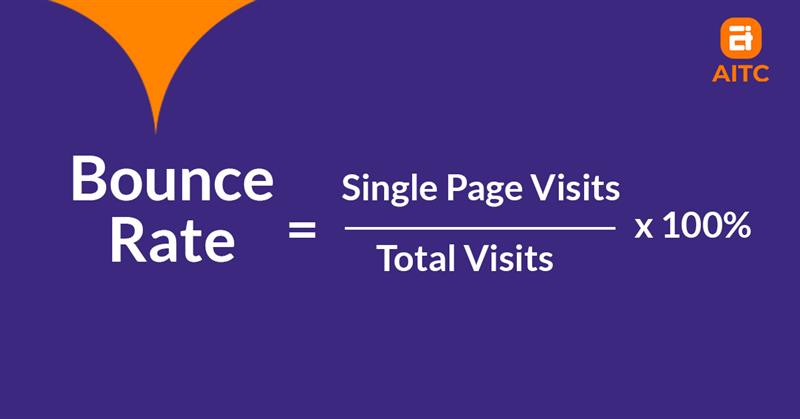
Bounce rate is a web analytics metric that measures the percentage of visitors who leave a website after viewing only one page. A single-page session represents a visit with just one interaction. Google Analytics defines a bounce as a session that triggers only a single request. Bounce rate indicates user engagement and reflects content relevance, helping businesses understand how well their pages meet visitor expectations. It also influences landing page performance in digital marketing and SEO. A high bounce rate often signals slow page speed, poor user experience (UX), or mismatched search intent.
Calculated as: Bounce Rate = (Single-page sessions / Total sessions) × 100
What Is a Good Bounce Rate for Websites?
A good bounce rate varies depending on website type, user intent, and traffic source. For blogs and news sites, 60–80% is normal because users often read a single article, reflecting informational intent. E-commerce websites typically aim for 20–45%, as lower bounce indicates exploration of product pages, interaction with CTAs, and stronger conversion potential. Landing pages may have 70–90% bounce rates yet still meet goals, such as newsletter signups or purchases. Evaluating bounce rate alongside session duration, conversion metrics, content relevance, page speed, UX design, and internal linking provides a more accurate view of website performance and SEO effectiveness.
Why Bounce Rate Matters for SEO and User Engagement?
Bounce rate is a key metric that reflects how well a website meets user expectations and aligns with search intent. A high bounce rate signals to Google that visitors leave without engaging, which can reduce search engine rankings and organic visibility.
High bounce rates often result from weak content relevance, poor internal linking, or slow page load speed and unoptimized Core Web Vitals. Search engines use behavioral signals such as dwell time, CTR, and pogo-sticking to evaluate content quality and user satisfaction. Conversely, a low bounce rate indicates strong user retention, longer session durations, deeper page exploration, and higher conversion potential, signaling authority and relevance to search engines.
Optimizing technical performance, content relevance, and site architecture improves UX, reduces bounce rates, enhances crawl efficiency, and strengthens overall organic SEO authority and traffic.
What Factors Cause a High Bounce Rate?
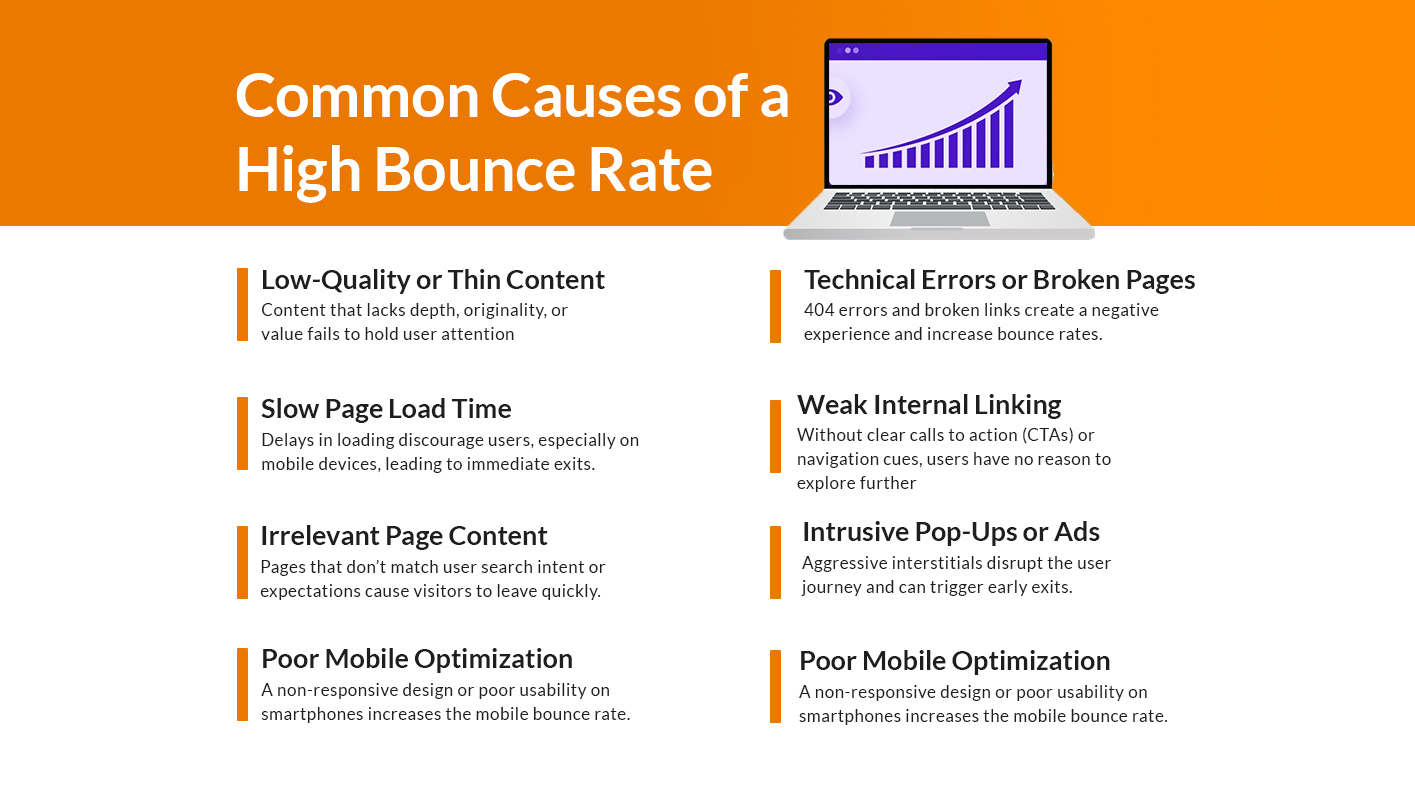
High bounce rates result from slow page load, poor UX, irrelevant content, non-mobile-optimized design, intrusive pop-ups, technical errors, or weak CTAs. Improving these factors enhances user engagement and SEO performance.
- Slow Page Load Time: Slow page load time is a major contributor to a high bounce rate. Visitors expect websites to load in under three seconds. Delays caused by unoptimized images, heavy JavaScript, or server latency reduce user engagement and time on site. Google considers page speed a ranking factor, which directly influences SEO success and search visibility.
- Poor User Experience (UX): Poor UX is a key factor that increases exit rate. Confusing navigation, cluttered layouts, and inconsistent design frustrate visitors and reduce time on site. Weak website architecture limits content discoverability and lowers user engagement, which can negatively affect ranking performance and overall digital marketing outcomes.
- Irrelevant or misleading content: Irrelevant or misleading content increases bounce rate by failing to meet user intent. Pages that do not align with search queries, meta titles, and on-page content cause immediate disengagement and reduce user trust. Poor content relevance negatively affects search engine performance and overall website credibility. To improve engagement, websites should conduct keyword-intent analysis, optimize meta descriptions, structure content to answer user queries directly, and use semantic variations and LSI keywords to strengthen relevance.
- Non-Mobile-Optimized Design: Non-mobile-optimized design increases visitor departure rate by creating poor mobile usability. Websites that lack responsive design often display distorted layouts, slow load times, or non-functional buttons. With mobile devices accounting for the majority of internet traffic, these issues reduce user engagement and negatively impact SEO health, especially under Google’s mobile-first indexing.
- Aggressive Pop-Ups and Ads: Aggressive pop-ups and ads increase bounce rate by disrupting the user journey. Intrusive or poorly timed overlays frustrate visitors, reduce user engagement, and lower trust. Excessive advertising causes early exits and negatively impacts SEO performance and overall website credibility.
- Technical Errors: Technical issues increase bounce rate by deterring visitors from engaging with a website. Broken links, server downtime, and 404 errors create a negative UX and reduce user retention. Maintaining website technical health improves organic performance, engagement, and overall digital credibility.
- Lack of clear calls-to-action (CTAs): Lack of CTAs increases bounce rate by creating dead-ends for visitors. Weak or missing CTAs reduce user engagement and disrupt the conversion path. Clear CTAs guide visitors toward the next steps, improving content strategy effectiveness, engagement, and overall website performance.
- Low-quality Content: Low-quality or hard-to-consume content increases bounce rate by failing to retain visitor attention. Content that is too short, poorly structured, or difficult to scan reduces time on page, page depth, and overall domain authority. Optimized content with headings, bullet points, visuals, internal links, and proper on-page SEO improves engagement metrics and strengthens content strategy effectiveness.
How to Reduce Your Website's Bounce Rate?
Low bounce rate is essential for improving user engagement, organic visibility, and overall, SEO performance.
Here are proven, search-optimized strategies:
1. Optimize Page Load Speed
Optimizing page load speed reduces bounce rate by improving user satisfaction and website performance. Slow-loading pages frustrate visitors and decrease engagement, especially when load times exceed three seconds. Tools like Google PageSpeed Insights and Lighthouse help audit Core Web Vitals, including Largest Contentful Paint (LCP) and First Input Delay (FID). Optimizing images (Image SEO), implementing lazy loading for offscreen content, minimizing render-blocking scripts, and using Content Delivery Networks (CDN) reduce server latency. Faster page speed strengthens SEO authority and enhances search visibility while keeping users engaged.
2. Align Content with Search Intent
Aligning content with search intent reduces bounce rate by ensuring pages meet user expectations. Content that does not match user intent drives visitors away and lowers engagement metrics. Performing keyword research and intent analysis helps identify whether users seek informational, navigational, or transactional content. Incorporating entities and semantic relationships in content strengthens semantic SEO and addresses related queries. Implementing structured data (Schema.org) allows search engines to understand page context, improving rich snippet visibility and overall SEO outcomes.
3. Improve Mobile Experience
Improving mobile experience reduces bounce rate by enhancing mobile usability and user engagement. Websites that lack mobile optimization or responsive design frustrate visitors, especially on smartphones, and increase exit rates. Adopting responsive design frameworks ensures layouts adapt to all screen sizes. Prioritizing touch-friendly navigation, fast mobile page load, and legible content improves mobile engagement. Testing with Google’s Mobile-Friendly Test and monitoring mobile metrics in Google Analytics strengthens SEO performance and supports Google’s mobile-first indexing.
4. Use Engaging Internal Linking
Internal linking reduces bounce rate by guiding visitors to related content and increasing time on site. Adding contextual internal links directs users naturally to other relevant pages. Using clear, CTAs encourages visitors to explore additional content or service pages. Establishing a logical content hierarchy improves user navigation and supports SEO crawlability, enhancing both engagement and search performance.
5. Enhance Content Readability
Enhancing content readability reduces bounce rate by improving user engagement and retention. Poorly structured content causes visitors to leave quickly. Using short paragraphs, bullet points, and subheadings improves scannability. Incorporating visual content such as charts, infographics, and videos supports textual information. Maintaining semantic consistency and linking related entities naturally strengthens content structure, keeps users engaged, and boosts SEO performance.
6. Remove Distractions
Intrusive pop-ups, autoplay videos, and excessive ads increase bounce rate by disrupting the user journey and reducing user trust. Limiting pop-ups to critical actions, such as newsletter signups, and making them easily dismissible improves user experience (UX). Maintaining a clean, user-centric design that emphasizes content and functionality over distractions enhances engagement metrics and supports overall SEO performance.
7. Analyze and Optimize with Analytics
Analyzing and optimizing with analytics reduces bounce rate by identifying pages that frustrate visitors and hinder user engagement. Using Google Analytics and Search Console helps monitor bounce rates, exit pages, and traffic sources. Deploying behavioral heatmaps (e.g., Hotjar, Crazy Egg) provides insights into user interactions. Continuously testing and improving UX elements, content relevance, and CTA placement based on data supports conversion optimization and strengthens overall organic search results.
8. Bad Website Design
Following best practices in website design reduces bounce rate by improving user engagement and strengthening SEO authority. High-quality web design and UX design enhance website performance, while poor design leads to slow, confusing, or broken pages. Implementing modern web development practices ensures performance, responsiveness, and accessibility. Maintaining consistent branding, clear navigation, and logical content structure improves user experience (UX). Regular audits for technical issues, broken links, and outdated elements further support website credibility and long-term engagement.
Key Takeaways
- Bounce rate refers to the percentage of users who leave a website after viewing only one page without taking any further action.
- A high bounce rate often signals poor user experience, irrelevant content, slow page speed, or technical issues.
- Since search engines use website engagement as a user satisfaction signal, it can directly impact your SEO performance.
- Common causes include slow-loading pages, weak mobile optimization, intrusive pop-ups, broken links, and low-value content.
- To reduce bounce rate, focus on faster loading times, content aligned with search intent, better mobile usability, and strong internal linking.
- Tools like Google Analytics and heatmaps help identify problem areas and improve engagement.
- Partnering with a skilled web development company can ensure a responsive and user-friendly site that keeps visitors engaged and supports improved rankings.
FAQs About Bounce Rate
Why is bounce rate important for SEO?
Bounce rate is a key user engagement metric that influences search engine rankings. A high bounce rate indicates low content relevance, poor user experience (UX), or slow page performance, signaling to search engines that a page may not meet user intent. Conversely, a low bounce rate reflects strong engagement, effective content, and positive UX, which can improve organic search visibility and overall SEO performance.
What causes a high bounce rate on websites?
High bounce rates result from technical, content, and UX factors that reduce user engagement. Slow page load times and unoptimized media negatively affect Core Web Vitals. Irrelevant or low-quality content fails to meet search intent. Poor mobile optimization and confusing UX design frustrate visitors. Intrusive pop-ups, autoplay videos, and excessive ads disrupt the user journey. Broken links, 404 errors, and weak internal linking make content hard to access. Addressing these factors improves user retention and strengthens search engine authority.
How can I reduce my website’s bounce rate?
Reducing bounce rate requires a multi-layered strategy to improve user engagement and SEO performance. Page speed optimization and monitoring Core Web Vitals ensure fast, smooth loading. Aligning content with user search intent and using semantic entities improves relevance. Enhancing mobile usability with responsive design and intuitive navigation reduces exits. Incorporating contextual internal linking and clear CTAs guides visitors to related content. Minimizing intrusive pop-ups, autoplay videos, and disruptive ads strengthens engagement, boosts conversion rates, and enhances overall website performance.
Is a high bounce rate always bad?
A high bounce rate is not always negative. Certain pages, such as landing pages, single-page blogs, or quick-conversion pages, may naturally have higher bounce rates while still achieving business goals. Evaluating bounce rate context requires considering page purpose, traffic source, and user intent, rather than relying solely on raw percentages. Proper analysis ensures that conversion metrics and overall website performance are accurately interpreted.
How do tools like Google Analytics help with bounce rate?
Tools like Google Analytics help reduce bounce rate by providing insights into user engagement metrics and visitor behavior. Google Analytics and Search Console identify pages with high bounce rates and reveal underlying causes. Using behavioral analytics such as heatmaps (Hotjar, Crazy Egg) shows how users interact with content, highlighting areas for UX improvements, technical fixes, and content optimization. These insights enable data-driven decisions that increase session duration, enhance engagement, and improve overall SEO performance.

Related insights

How to Build a Successful Digital Marketing Strategy
23 Jan 2026

Top IT Jobs That Are in High Demand in Nepal
3 Jun 2026

Top Digital Marketing Company in Nepal – Best Marketing Agency for Your Brand
24 Apr 2025
Have a project in mind? Let's build something great.
Share your ideas or questions and our experts will get back to you shortly.
Unlock Expert Guidance
Need expert IT advice? Our seasoned professionals are here to help you navigate your tech challenges. Schedule a session with us and get personalized solutions tailored to your business needs.

Connect with Us and Let's Build Something Together
We'd love to hear from you! Whether you have questions, need support, or want to discuss a new project, our team is ready to assist. Fill out the form below, and we’ll get back to you as soon as possible.
Prefer a Direct Consultation?
Connect with our team for a 1-on-1 virtual session to discuss your project, understand your needs, and explore the right solution for your business.
What's Next?
- 1Connect with you at a convenient time
- 2Explore your needs, goals, and requirements
- 3Prepare a tailored proposal based on your needs
Why Choose Us
Connect with AITC
Select your inquiry type to route your request to the right department.
Our Office Locations
Operating across 3 key timezone hubs to serve global enterprise clients.