







SEO
Digital Marketing
SEO Basics: Why It’s Essential for Your Website?

sachin pokharel
19 Feb 2026
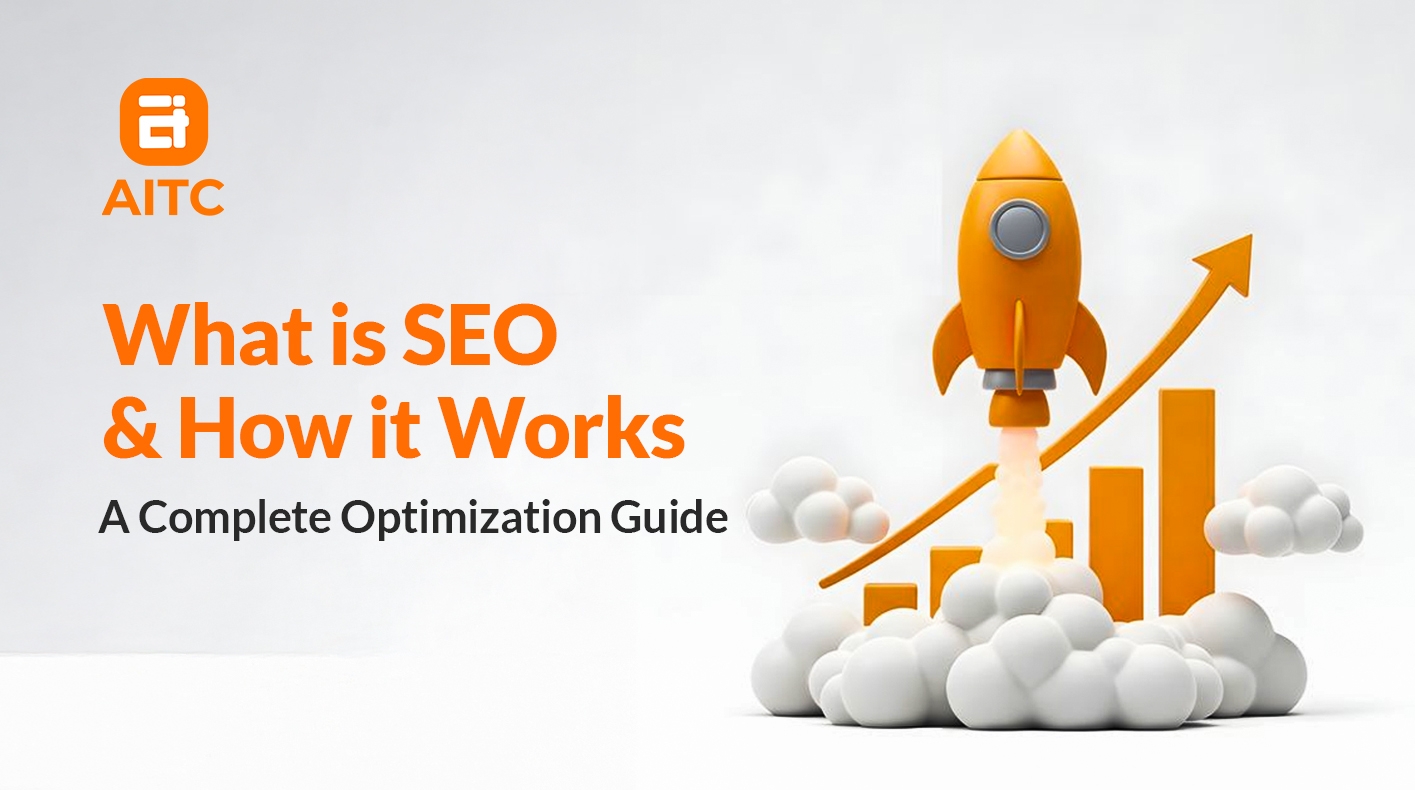
SEO (Search Engine Optimization) – Complete Guide for Businesses
What is SEO?
SEO (Search Engine Optimization) is part of digital marketing that helps websites rank higher on Google. It works by improving content, website structure, and technical setup. SEO also builds credibility and authority through links and quality signals, which helps attract more visitors and generate leads.
To achieve this, SEO uses techniques like keyword research, on-page optimization, and link building. Tools like Google Search Console and SEMrush help track performance and refine strategies, allowing businesses to improve traffic, visibility, and overall online presence.
How Does SEO Work?
SEO works by optimizing your website’s content, structure, and authority so that search engines like Google can understand your site and determine which pages to show for specific search queries. The SEO process involves three main steps: Crawling, Indexing, and Ranking. Let’s break each step down in detail.
Crawling
Crawling is the first step of SEO, where search engines like Google use automated bots, called crawlers or spiders, to find new and updated web pages. They explore your site structure, internal links, and sitemap to understand and discover important content efficiently.
Indexing
Indexing is the SEO step where search engines store and organize your web pages in their database so they can appear in search results. During indexing, Google analyzes your content, headings, images, metadata, and structured data to understand the topic and relevance of each page.
Ranking
Ranking is the final SEO step where search engines like Google use their algorithms to determine the order of pages in search results for a specific query. These algorithms evaluate multiple factors, including:
- Content quality and relevance – Does the page answer the user’s question effectively?
- Page authority and backlinks – How trusted and credible is the page within its topic?
- User experience – Is the site mobile-friendly, fast-loading, and easy to navigate?
- Search intent match – Does the page satisfy what the user is looking for?
Pages that best satisfy these factors are ranked higher, driving more organic traffic from search engines. To improve rankings, create helpful, high-quality content that aligns with user intent, follows search engine algorithms, and builds site authority and credibility.
The SEO process of crawling, indexing, and ranking relies on strategies like On-Page, Off-Page, and Technical SEO to improve a website’s visibility, authority, and organic traffic.
Further reading: How a Search Engine Works?
Core Components and Types of SEO
SEO consists of three main components, also called types of SEO—On-Page, Off-Page, and Technical SEO. Together, they help websites rank higher on Google and attract the right audience by optimizing content, backlinks, and site performance.
1. On-Page SEO
On-Page SEO focuses on optimizing web pages to improve their search engine rankings and relevance. As a key type of SEO, it directly influences how search engines crawl, interpret, and rank content. Its main attributes include title tags, meta descriptions, headings, content quality, URL structure, internal linking, image optimization, and user experience, all of which work together to make a page both search-engine-friendly and valuable to users.
Key Elements of On-Page SEO
- Title Tags: Clear, keyword-rich titles that summarize the page content and signal relevance to search engines.
- Meta Descriptions: Concise summaries that describe the page and encourage users to click from search results.
- Headings (H1–H6): Structured headings that organize content logically and emphasize key topics.
- Content Optimization: High-quality, relevant content with naturally placed keywords that satisfy user intent.
- URL Structure: Short, descriptive URLs that include target keywords for both search engines and users.
- Internal Linking: Links to other pages on your website to guide users and distribute page authority.
- Image Optimization: Proper alt text and compressed images for faster loading and improved accessibility.
- User Experience (UX): Mobile-friendly, fast-loading pages with intuitive navigation to enhance engagement.
Further reading: Master On-Page SEO with proven strategies
2. Off-Page SEO
Off-Page SEO is a type of SEO that focuses on improving a website’s authority, trustworthiness, and rankings through activities performed outside the website. Unlike On-Page SEO, which optimizes content within the site, Off-Page SEO helps search engines like Google evaluate a website’s popularity and credibility across the internet. It includes acquiring high-quality backlinks, earning brand mentions, guest blogging, and social media promotion. These external signals act as trust indicators, helping search engines determine the website’s authority and improving its position in search engine results pages (SERPs). Off-Page SEO works alongside On-Page SEO and Technical SEO as one of the three core components of Search Engine Optimization.
Key Elements of Off-Page SEO
- Backlinks (Inbound Links):
Links from other websites pointing to your site. High-quality backlinks from authoritative and relevant websites signal trust and improve rankings. - Domain Authority and Trust:
The overall strength and credibility of your website based on backlink quality, website age, and reputation. - Brand Mentions:
When your brand name is mentioned on other websites, blogs, or forums—even without a link—it helps search engines recognize your brand authority. - Social Media Signals:
Sharing content on platforms like Facebook, LinkedIn, X (Twitter), and Instagram increases visibility, traffic, and brand awareness. - Guest Posting:
Writing articles for other websites in your niche to earn backlinks, increase exposure, and build authority. - Online Reputation Management:
Managing reviews, ratings, and feedback on platforms like Google Business Profile, Trustpilot, and Yelp to build trust. - Local SEO and Citations:
Listing your business on directories such as Google Business Profile, Bing Places, and local directories to improve local search visibility. - Influencer Outreach:
Collaborating with influencers or industry experts who can mention or link to your website. - Content Promotion:
Promoting your content through communities, forums, and social platforms to increase reach and attract backlinks.
Further Reading: Learn the basics of Off-Page SEO
3. Technical SEO
Technical SEO is a type of SEO that focuses on optimizing a website’s infrastructure so search engines like Google can efficiently crawl, interpret, and index its pages. Unlike On-Page SEO, which optimizes content, and Off-Page SEO, which builds authority through external signals, Technical SEO ensures the website is accessible, fast, secure, and properly structured. This helps search engines understand your website and improves its visibility and rankings in search engine results pages (SERPs).
Technical SEO works by improving crawlability, indexability, site performance, and technical structure, ensuring search engines can access and process your website without errors.
Key Elements of Technical SEO
- Site Speed Optimization: Site speed refers to how quickly your web pages load and become usable for visitors. Fast-loading websites improve user experience and are favored by search engines as a ranking factor. Slow websites increase bounce rate and reduce engagement.
- Mobile-Friendliness: Mobile-friendliness ensures your website works properly on smartphones and tablets. Google uses mobile-first indexing, meaning it primarily crawls and ranks the mobile version of your website.
- XML Sitemap Optimization: An XML sitemap is a structured file that lists all important pages on your website. It helps search engines discover, crawl, and index your content more efficiently. Submitting your sitemap in Google Search Console improves crawl efficiency and ensures important pages are indexed.
- Robots.txt Optimization: The robots.txt file instructs search engine crawlers which pages or sections of your website they can or cannot crawl. Proper configuration ensures search engines focus on important pages and avoid unnecessary or duplicate pages.
- Canonical Tags Optimization: Canonical tags help search engines identify the preferred version of duplicate or similar pages. This prevents duplicate content issues and consolidates ranking signals into one primary URL.
- Structured Data (Schema Markup): Structured data is a standardized format that helps search engines understand the meaning and context of your content. It enables enhanced search features called rich results, such as star ratings, FAQs, product information, and featured snippets.
Common schema types include:
- Article schema
- Product schema
- FAQ schema
- Review schema
- HTTPS (SSL Certificate): HTTPS ensures secure communication between the website and users by encrypting data. Google considers HTTPS a ranking factor and prioritizes secure websites in search results. Websites with SSL certificates display a secure padlock icon in the browser.
Further Reading: Learn Technical SEO to make your site fast
Benefits of SEO for Businesses
By ranking higher in Google search results and targeting high-intent search queries, SEO attracts qualified website traffic that converts into customers. This reduces dependence on paid advertising, lowers customer acquisition cost (CAC), and improves overall return on investment (ROI).
SEO directly drives business growth by increasing organic search visibility, improving lead generation, boosting conversion rates, and strengthening revenue performance.
SEO integrates digital marketing strategy, content optimization, user experience (UX), and technical website performance into a measurable growth framework that supports sustainable and scalable business success.
Let's understand core benefits of SEO in details:
1. Increases Organic Traffic
Organic traffic comes from unpaid search results on Google and other search engines. Research shows that the #1 result in Google captures approximately 27–32% of all clicks, while over 75% of users never go past the first page. Higher rankings generate more impressions, clicks, and website sessions, directly impacting lead generation.
2. Builds Trust and Credibility
Websites that rank on the first page are perceived as more trustworthy. Search engines evaluate content quality, backlinks, domain authority, technical SEO, and user experience. Strong ranking signals expertise, authority, and reliability, which increases brand trust.
3. Targets High-Intent Users
SEO captures users based on search intent:
- Informational intent
- Navigational intent
- Transactional intent
- Commercial investigation
Studies show that SEO leads have a 14.6% close rate, compared to 1.7% for outbound marketing, making organic traffic highly conversion-focused.
4. Improves User Experience (UX)
Google prioritizes mobile-friendly websites, fast page speed, structured data, internal linking, and clear site architecture. Since over 60% of searches come from mobile devices, optimized UX improves both rankings and engagement metrics like bounce rate and dwell time.
5. Cost-Effective Long-Term Strategy
SEO reduces dependency on paid ads. While PPC stops generating traffic when the budget ends, organic rankings continue delivering results. Businesses that invest in SEO often see compounding ROI over time, lowering customer acquisition cost (CAC).
6. Supports Brand Awareness
Appearing in featured snippets, People Also Ask, local packs, and knowledge panels increases brand visibility. Even without clicks, repeated exposure strengthens brand recall and topical authority.
7. Creates Competitive Advantage
If competitors dominate search rankings, they capture market share and organic leads. Strong SEO helps businesses rank for high-value keywords, competitor terms, and industry topics, establishing long-term digital authority.
How SEO Supports Digital Marketing
SEO is a core component of digital marketing that drives business growth by increasing organic search visibility, guiding content strategy, improving paid advertising performance, and generating high-intent leads.
By aligning keyword research, search intent insights, and technical website optimization with marketing campaigns, SEO ensures your digital marketing efforts are data-driven, measurable, and results-oriented.
SEO integrates content marketing, paid media, user experience (UX), and analytics into a unified framework that reduces customer acquisition cost (CAC), boosts conversion rates, and strengthens overall return on investment (ROI).
Let’s explore how SEO supports digital marketing strategy in detail:
1. Guides Content Marketing
SEO identifies high-volume keywords, long-tail search terms, and user search intent, providing data-driven insights for content creation.
This ensures that blog posts, landing pages, product descriptions, and pillar content align with what users are actively searching for.
Result: Higher organic visibility, increased engagement, and better lead generation.
2. Improves Paid Advertising (PPC) Performance
SEO keyword research and competitive analysis enhance paid advertising campaigns by:
- Selecting high-converting keywords
- Optimizing ad copy relevance
- Improving landing page quality
Aligned SEO and PPC strategies increase Quality Score, reduce cost-per-click (CPC), and improve overall campaign ROI.
3. Supports Conversion Rate Optimization (CRO)
SEO drives targeted traffic based on search intent:
- Informational searches
- Transactional queries
- Commercial research
This pre-qualified audience converts more effectively. SEO analytics also provide insights into page performance, bounce rate, and dwell time, which inform CRO strategies for landing pages and funnels.
4. Strengthens Brand Authority
Ranking consistently in Google search results, featured snippets, People Also Ask, and local packs increases brand visibility.
This builds brand recognition, trust, and topical authority, which supports social media campaigns, email marketing, and retargeting efforts.
5. Provides Data-Driven Marketing Insights
SEO tools deliver measurable insights on:
- Organic traffic growth
- Keyword performance
- Competitor strategies
- Backlink profiles
This data informs digital marketing decisions, helping businesses optimize campaigns, allocate budgets efficiently, and target the right audience.
6. Reduces Customer Acquisition Cost (CAC)
Organic search traffic generated through SEO reduces reliance on paid channels, lowering CAC while providing long-term, sustainable leads.
Over time, SEO compounds ROI by continuously driving high-intent traffic without recurring ad spend.
7. Aligns Digital Marketing into a Unified Strategy
SEO connects content marketing, paid campaigns, UX optimization, and analytics into a measurable growth framework.
Businesses can track performance, optimize conversions, and scale digital marketing efforts efficiently, ensuring sustainable and profitable business growth.
Industry-Specific SEO Use Cases
1. E-Commerce & Retail
SEO helps e-commerce and retail businesses increase sales and product visibility by optimizing product and category pages with high-intent keywords. Implementing structured data for price, reviews, and availability improves Google search visibility and click-through rates, while fast site speed and mobile-friendly UX enhance user engagement. For example, an online fashion store ranking for “affordable running shoes” can drive significant organic traffic and boost online sales.
Further reading: E-Commerce SEO
2. Healthcare & Medical Services
Healthcare providers and medical clinics use SEO to educate users, attract patients, and build trust. By targeting local SEO keywords such as “pediatrician near me” and publishing informative content about symptoms, treatments, and health tips, businesses can improve search visibility and authority. Optimizing Google Business Profiles and patient reviews further enhances credibility. A dental clinic ranking for “best dentist in Chicago” can see an increase in new patient appointments and brand trust.
3. Travel & Hospitality
Travel agencies, hotels, and hospitality services leverage SEO to increase bookings and travel inquiries. Optimizing landing pages for destination-specific keywords, creating detailed travel guides, and building backlinks from authoritative travel blogs helps improve rankings in Google search results. For instance, a hotel ranking for “romantic weekend getaway in Paris” can generate more direct bookings and higher occupancy rates, strengthening its online presence and revenue.
4. Technology & SaaS
SaaS companies and tech businesses use SEO to generate leads and subscriptions by targeting commercial and transactional keywords such as “best CRM software for startups.” Publishing case studies, tutorials, and comparison guides optimized for featured snippets and People Also Ask boxes improves search visibility and positions the brand as a trusted authority. A SaaS company ranking for “project management tools for remote teams” can attract high-intent leads and drive conversions.
5. Education & Online Courses
Educational institutions and online learning platforms use SEO to attract students and increase course enrollments. Optimizing course landing pages with long-tail keywords, publishing blogs related to career paths, and implementing structured data for courses and events improves search engine rankings. An online coding bootcamp ranking for “learn Python online free” can drive more student registrations and enhance the program’s visibility in competitive educational searches.
6. Real Estate
Real estate businesses generate property inquiries and leads by implementing local SEO strategies targeting cities, neighborhoods, and property types. Creating content on home buying tips, market trends, and property guides while optimizing Google Business Profiles and listing portals strengthens online authority. For example, a realtor ranking for “3-bedroom homes in Austin TX” can attract more qualified property inquiries and grow client pipelines.
7. Food & Restaurants
Restaurants and food businesses leverage SEO to attract diners and increase online orders. Optimizing for “near me” and local keywords, building citations in food directories and maps, and promoting menus, recipes, and customer reviews improves local search visibility. A restaurant ranking for “best pizza in Brooklyn” can increase both reservations and online delivery orders, enhancing revenue and local brand presence.
8. Finance & Banking
Financial services and banks use SEO to generate leads for credit cards, loans, and investment products. Targeting high-intent keywords like “best credit card for cashback,” publishing educational content on personal finance, and optimizing landing pages for conversions and trust signals improves search engine authority. A credit card company ranking for “low-interest balance transfer credit card” can drive new applications and improve overall customer acquisition.
9. Healthcare & Wellness
Wellness centers and physiotherapy clinics use SEO to educate users and convert clients. By targeting local and treatment-specific keywords, publishing informative blog content on therapies and wellness tips, and optimizing reviews and local listings, businesses improve both local search visibility and credibility. A physiotherapy clinic ranking for “back pain therapy near me” can gain new patient appointments and strengthen its authority in the wellness space.
10. Professional Services (Legal, Consulting, Marketing)
Professional service providers use SEO to capture high-value leads. By targeting niche-specific service keywords such as “business lawyer for startups,” creating guides, case studies, and FAQ content, and optimizing local SEO, businesses attract nearby clients actively searching for services. A law firm ranking for “divorce attorney in Los Angeles” can generate new client consultations and establish long-term digital authority.
Further Reading: Learn top SEO best practices
How was SEO Introduced?
In the 1990s, as websites rapidly began appearing, people needed a way to find information online, which led to the creation of search engines like Yahoo, AltaVista, and later Google.
To determine which websites should appear first in search results, these platforms developed ranking systems, which gave rise to SEO.
In the early days, SEO remained simple, as website owners relied on adding primary keywords to their content to improve rankings.
However, everything changed in 1998 when Google launched and introduced PageRank, a system that evaluated websites based on the number and quality of links pointing to them. Because Google considered high-quality links as signals of trust, pages with more valuable backlinks ranked higher.
As a result, SEO shifted away from keyword stuffing and began emphasizing quality content and strategic link building.
Growing Up (2010s)
Google has improved its algorithm as internet usage has grown.
It started looking at websites having things like:
- How fast does a site load?
- Will it work on mobile phones?
- Is the content helpful or original?
Google also released updates like:
- Panda (to fight low-quality content).
- Penguin (to stop spammy links).
- Hummingbird (to better understand search intent).
These algorithm updates forced websites to focus on user experience, not stuffing.
SEO Today (2020s and beyond)
Nowadays, search engines understand user intent using machine learning, NLP, and AI and provide relevant results.
Google’s AI models, such as BERT and Gemini, help search engines understand language more naturally, making clear and helpful content more likely to rank well.
It’s not just about keywords anymore.
It’s about:
- Answering real questions.
- Using clear and structured content.
- Providing value.
Traditional SEO vs Modern (Semantic) SEO
| Aspect | Traditional SEO | Modern / Semantic SEO |
| Core Focus | Exact keyword matching | Search intent & topic meaning |
| Search Engine Understanding | String-based matching (words) | Entity & context understanding |
| Content Writing Style | Keyword repetition | Natural language & topic coverage |
| Keyword Usage | High keyword density | Primary + secondary + LSI keywords |
| Content Scope | Narrow topic targeting | Broad topical authority |
| Ranking Signal | Keyword frequency | Relevance, intent satisfaction, authority |
| User Experience | Often unnatural and repetitive | Readable and helpful |
| Algorithm Era | Pre-Hummingbird / early Google | Hummingbird, RankBrain, BERT, Helpful Content |
| Example Approach | “best Italian restaurant in New York” repeated many times | Mentions pasta, Manhattan, Italian cuisine, dining experience |
| Content Structure | Short pages targeting single keyword | Content clusters & topic hubs |
| Optimization Method | On-page keyword placement | Entities, semantics, internal linking |
| SERP Results | Blue links only | Featured snippets, People Also Ask, rich results |
| Use of Entities | Not considered | Core ranking component |
| Data Markup | Rarely used | Structured data / Schema markup |
| Link Building | Quantity over quality | Topical relevance & authority links |
| Content Goal | Rank for a keyword | Solve a search problem |
| Measurement | Ranking position | Engagement, dwell time, satisfaction |
| Long-term Performance | Short-term gains | Sustainable rankings |
Key Takeaways
- SEO improves your website's online visibility in search results, helping attract more visitors without relying on paid traffic.
- Modern SEO prioritizes helpful, relevant content that directly addresses user intent and real search queries.
- SEO Types are: 1. On-Page SEO 2. Off-Page SEO 3. Technical SEO
- Effective SEO focuses on delivering value through clear, well-structured content that matches user intent and drives long-term growth.
- Backlinks remain important—links from trusted websites signal credibility and help boost your site’s search rankings
- Contact AITC International for reliable SEO services that combine content strategy, technical and local SEO, and ethical link building to boost your website's search visibility.
Related insights

How to Build a Successful Digital Marketing Strategy
23 Jan 2026

Top IT Jobs That Are in High Demand in Nepal
3 Jun 2026

Top Digital Marketing Company in Nepal – Best Marketing Agency for Your Brand
24 Apr 2025
Have a project in mind? Let's build something great.
Share your ideas or questions and our experts will get back to you shortly.
Unlock Expert Guidance
Need expert IT advice? Our seasoned professionals are here to help you navigate your tech challenges. Schedule a session with us and get personalized solutions tailored to your business needs.

Connect with Us and Let's Build Something Together
We'd love to hear from you! Whether you have questions, need support, or want to discuss a new project, our team is ready to assist. Fill out the form below, and we’ll get back to you as soon as possible.
Prefer a Direct Consultation?
Connect with our team for a 1-on-1 virtual session to discuss your project, understand your needs, and explore the right solution for your business.
What's Next?
- 1Connect with you at a convenient time
- 2Explore your needs, goals, and requirements
- 3Prepare a tailored proposal based on your needs
Why Choose Us
Connect with AITC
Select your inquiry type to route your request to the right department.
Our Office Locations
Operating across 3 key timezone hubs to serve global enterprise clients.