





Software
HRMS
Best HRMS Software in Nepal 2026 | Top HR Solutions for Businesses
_1764647301456-509174643_2025-12-02.png&w=3840&q=100)

roshan adhikari
02 Dec 2025
Running HR manually in Nepal still creates the same problems everywhere: payroll mistakes, confusing attendance records, and no clear employee data. HR teams end up doing busy work instead of real work.
That is why more companies are searching for the best HRMS software in Nepal. A good HRMS cuts errors, saves time, and gives a clear view of your workforce. This guide helps you understand what matters and which HRMS tools actually deliver results.
This content is for businesses, HR managers, and decision makers who want a practical comparison, not sales talk.
What HRMS Really Means
HRMS (Human Resource Management System) is software that brings all HR tasks into one organized platform. Instead of juggling papers, spreadsheets, and messages, everything stays in a single system. With HRMS, companies can easily track attendance, manage leave, run payroll, store employee records, and monitor performance without confusion or extra work.
Nepali companies are quickly shifting to HRMS because manual HR processes are slow, error-prone, and difficult to maintain. HR teams want fewer mistakes, business owners want clear and reliable data, and employees want simple access from their phones. A good HRMS meets all these needs efficiently and effortlessly.
Key Features to Look For in HRMS Software
A good HRMS should remove busy work, reduce errors, and give your team more control over daily tasks. When companies search for HR software in Nepal, these are the features that actually make a difference.
Attendance and Leave Management
You need a system that handles daily check-ins, outdoor visits, shift hours, and leave approvals without confusion. A strong HRMS keeps attendance clean, prevents disputes, and gives employees clarity on their leave balance.
Payroll and Tax Calculation
Manual payroll takes too long and is easy to mess up. A reliable HRMS should calculate salary, overtime, deductions, bonus, and tax in one go. This helps HR avoid recalculations and keeps salary slips accurate every month.
Employee Records
All employee information stays in one dashboard. From documents to job history to performance notes, digital records make it easier to update, review, and find data in seconds. No more digging through files or old spreadsheets.
Shift and Roster Planning
Companies with rotating or irregular schedules need this. It helps you plan shifts, avoid overlap, fill gaps, and adjust rosters quickly. This cuts confusion between HR, managers, and employees.
Performance Tracking
Simple tools for goal setting, monthly check-ins, and review cycles help teams stay accountable. It gives managers a clearer picture of how people are performing without complex reporting.
Mobile Access
Most employees in Nepal prefer to apply for leave, check attendance, or view salary slips from their phone. Mobile access makes HRMS adoption smoother and reduces HR’s workload.
Local Support
Good support matters more than any feature. When something breaks or you need help, fast and clear support keeps your HR work moving without delays.
Best HRMS Software in Nepal (2026)
Here’s a practical list of HRMS solutions used by businesses in Nepal. These tools save time, reduce errors, and make HR work simpler.
1. Kumari Job HRMS
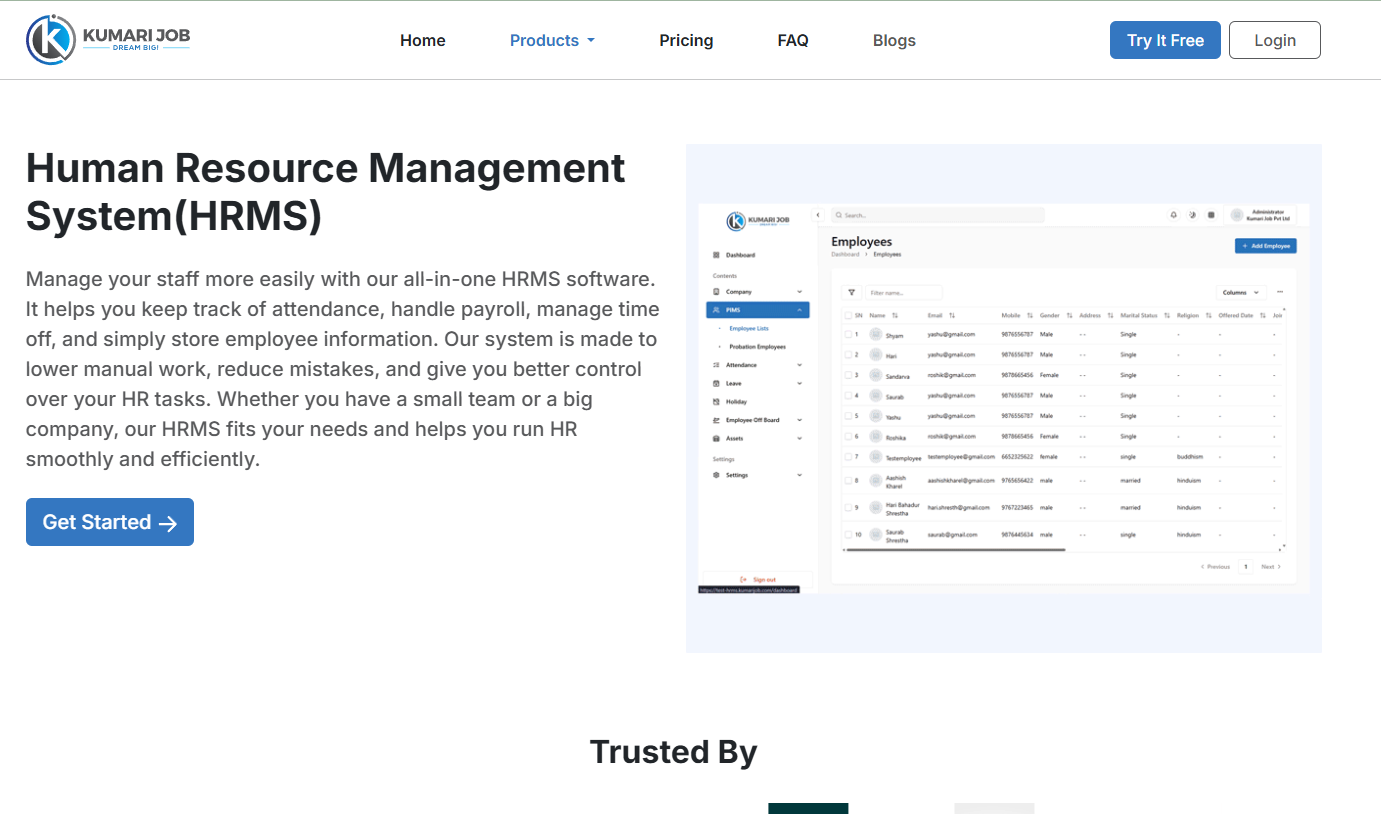
Kumari HRMS is built for companies that want simple control over attendance, leave, payroll, and employee records. The system reduces manual work and keeps HR data in one place. It suits both small teams and large companies that need reliable tracking and fewer mistakes.
Best for
Businesses in Nepal that want a simple, all-in-one HR tool with attendance and leave at the center.
Key features
- Attendance and leave tracking
- Payroll handling
- Centralized employee database
- Asset assignment and tracking
- Offboarding workflows
- Holiday and leave policy sync
- Analytics and reporting
- Remote access on multiple devices
- Biometric integration support
2. Zoho Recruit
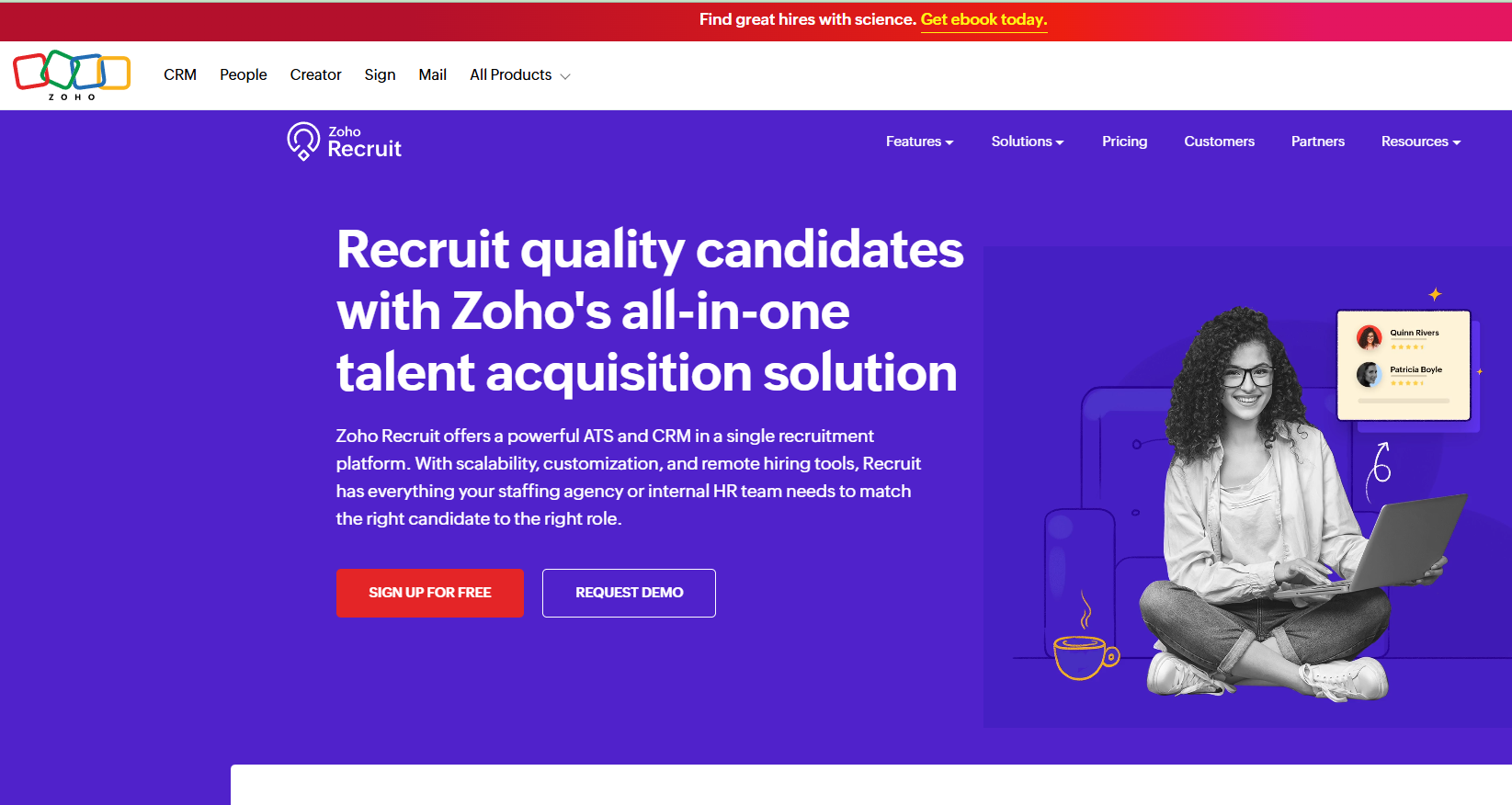
This platform mixes an ATS and recruitment CRM into one system. It helps teams source talent, track candidates, automate hiring steps, and run onboarding faster. It’s made for both staffing agencies and internal HR teams that need structured hiring and fewer drop-offs.
Best for
Agencies and HR teams that handle high-volume hiring and want automation, analytics, and job board distribution.
Key features
- ATS + recruitment CRM
- Automated workflows
- Job posting to 75+ job boards
- Pipeline tracking
- Mobile app for hiring
- Integrations with CRM, Slack, Outlook, LinkedIn
- Analytics and reporting
- Candidate engagement tools
- Temp workforce integration via Zoho Workerly
3. Talent Connects ATS
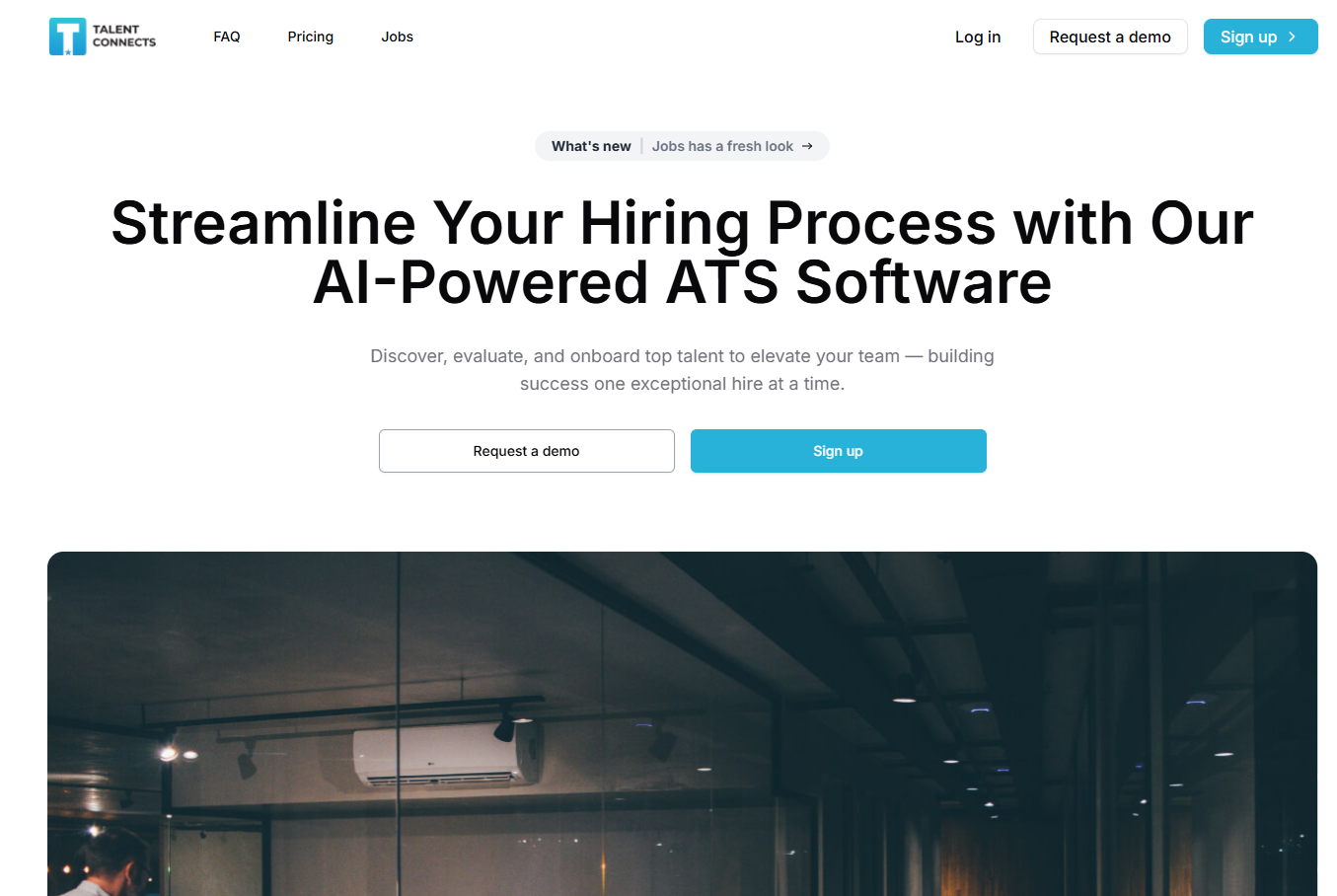
Talent Connects ATS focuses on fast hiring with AI support, job-board distribution, assessments, and automated workflows. It suits teams that need a clean hiring pipeline and built-in HRIS features like onboarding, payroll, shift tracking, and asset management. It aims to replace scattered tools by giving HR one system to run the full cycle.
Best for
Companies in Nepal that want ATS plus HRIS in one tool rather than juggling separate apps.
Key features
- Post jobs to 10+ job boards
- Pre-assessment module
- Candidate pipeline tracking
- Interview scheduling
- Talent pool creation
- Employee onboarding
- Leave management
- Learning management
- Asset management
- Shift management
- Reimbursement tracking
- Payroll support
- Biometric attendance integration
4. RemoFirst (EOR and Global Payroll)
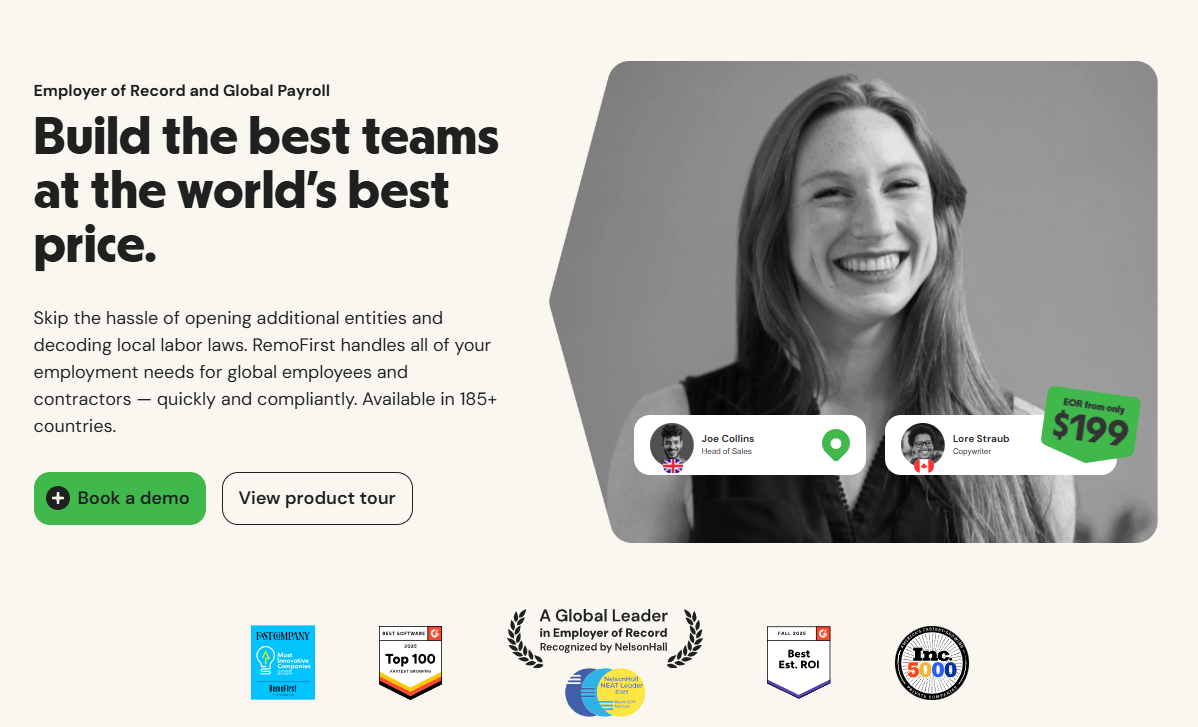
RemoFirst platform helps companies hire workers in other countries without opening local entities. It handles compliance, contracts, payroll, onboarding, and contractor payments across 185+ countries. It targets teams that want to scale globally at low cost while avoiding legal and tax risks.
Best for
Companies that hire remote talent in multiple countries and need compliant global payroll without building local entities.
Key features
- Employer of Record service in 185+ countries
- Contractor management and payments
- Fast onboarding
- Global payroll processing
- Local compliance support
- Country cost calculator
- Dedicated account managers
- Admin and paperwork handling
- 24/5 support
- Research library and country guides
5. Nimble HRMS
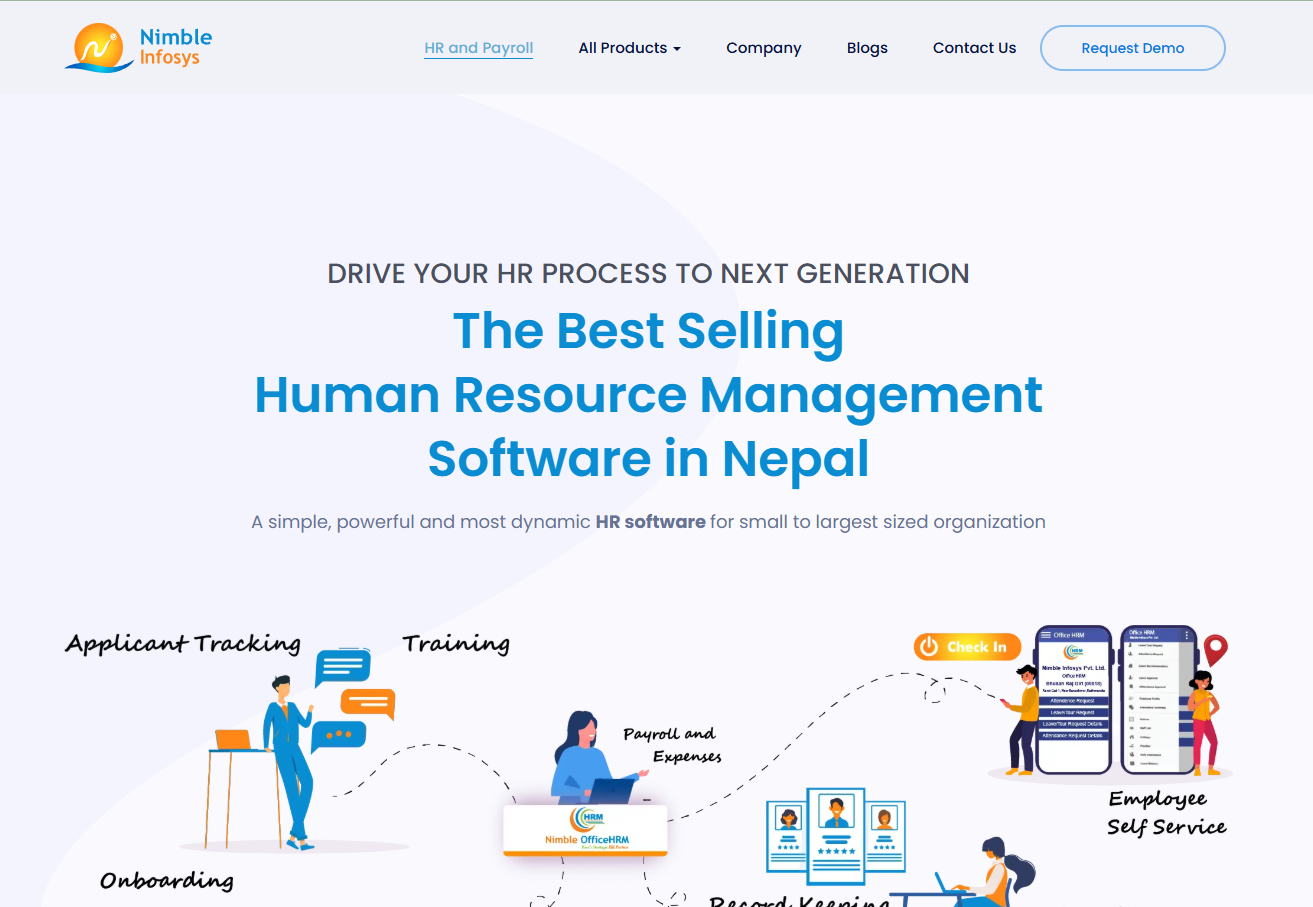
Nimble HRMS platform tries to cover every HR workflow from recruitment to retirement, built for organizations that need heavy automation. It targets banks, NGOs, factories, and large groups that deal with complex shifts, compliance rules, and high-volume data. It’s designed to replace spreadsheets, manual approvals, and scattered systems with a single HR hub.
Best for
Large or multi-unit organizations that need deep customization and strong compliance handling.
Key features
- Recruitment to onboarding automation
- Full HRIS with records, history, letters, grievances
- Advanced payroll with tax, PF, CIT, SSF, loans, allowances
- Leave and attendance with shift, OT, location tracking
- 360 performance appraisal
- Training automation
- Travel and reimbursement
- ESS web + mobile with GPS
- Task management and collaboration
- Multi-unit exit process
- ERP and core banking integrations (SAP, Finacle, etc.)
- Custom analytical reports
6. RigoHR
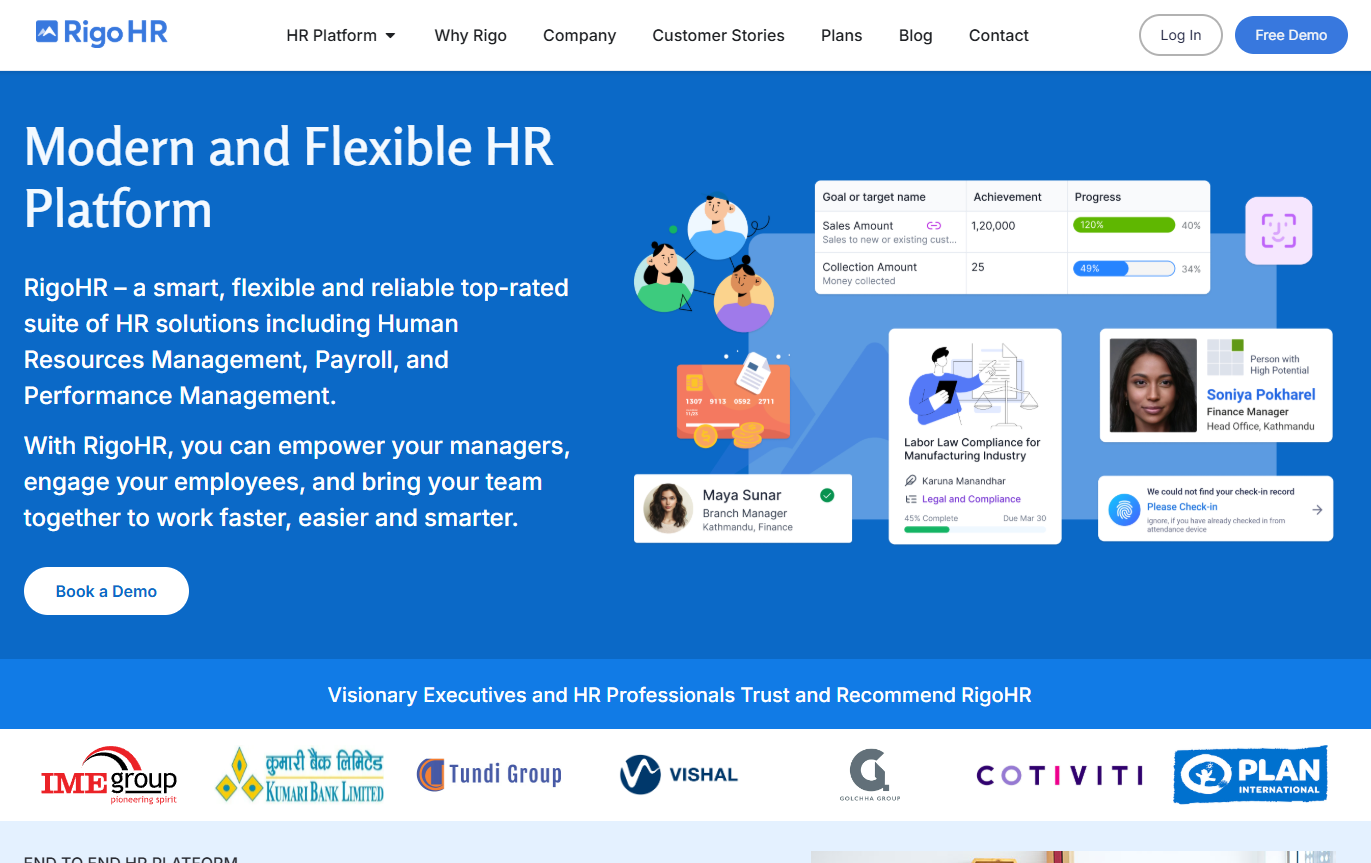
Rigo HR platform positions itself as a full HR system built for modern organizations that want clean workflows and reliable payroll automation. It tries to merge HR, payroll, performance, learning and engagement into one place. Its pitch is simple: faster onboarding, accurate pay, better control, and visibility across the entire workforce.
Best for
Mid to large companies that want a flexible HR suite with strong payroll accuracy and fast implementation.
Key features
- End to end HR from hiring to retiring
- HRIS with roles, permissions and audit logs
- Payroll with bank standards, tax, PF, CIT, SSF
- Performance, goals and employee engagement
- Learning and development
- Manager dashboards and executive insights
- Multi-company and group-company structure
- Web and mobile ESS
- SSO for Google and Microsoft
- Automated backups and ISO 27001 compliant security
7. Bidhee HRMS
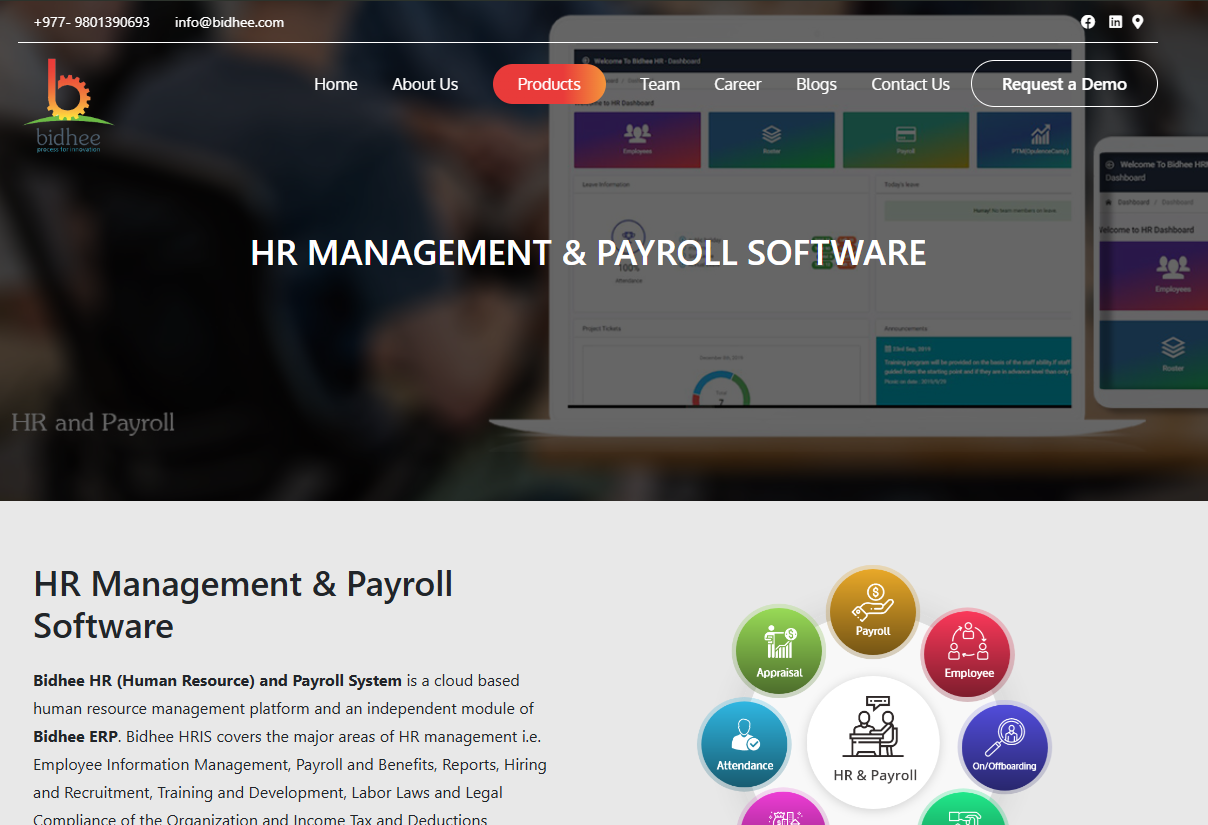
Bidhee HRMS is a cloud HR and payroll system built as part of the Bidhee ERP ecosystem. It focuses on detailed employee records, payroll accuracy, compliance, and strong workflow controls. The system tries to cover every operational HR function with many configurable modules, which works well for organizations that want tighter control and structured processes.
Best for
Companies that want a very detailed, module-heavy HRMS with strong compliance, payroll, and roster features.
Key features
- Employee information, transfers, promotions and TADA
- Attendance with biometric and mobile check-in
- Leave rules, approvals and balance tracking
- Full payroll cycle with tax, PF, CIT, loans, benefits and mass increments
- Shift, roster and overtime management
- Onboarding and offboarding with asset handling
- Appraisal and KPI tools, including 360 review
- Asset management and retirement workflows
- Employee self-service with payslips, reports and requests
- Android and iOS mobile app
- Custom dashboards, dynamic fields and custom reports
- Alerts, reminders and document management
- Real time notifications and role-based access
8. HajirHR – HR Core (HRMS)
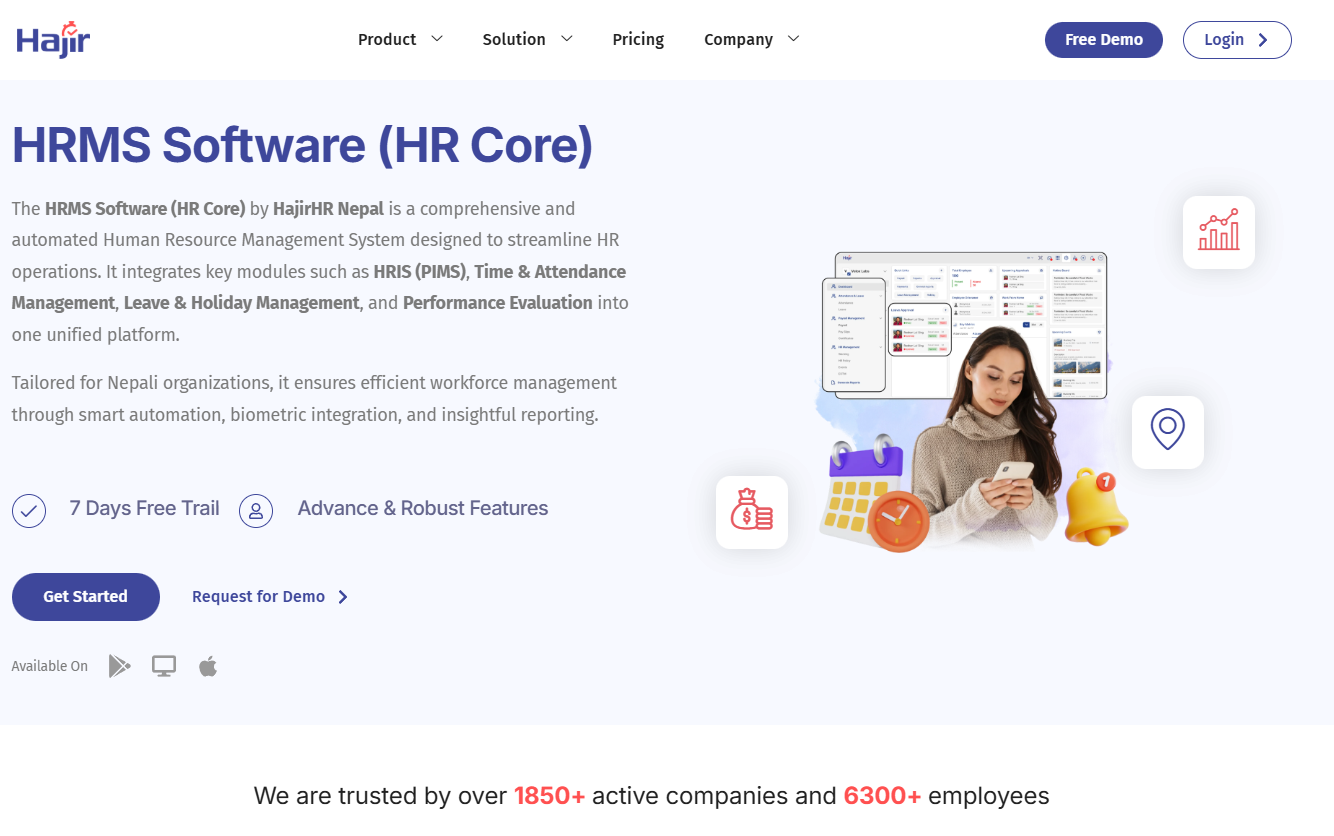
Hajir HR is a lightweight but focused HRMS built for Nepali companies that need quick deployment and solid attendance, HRIS, leave tracking and KPI features. It works well for businesses that rely on biometric devices and want simple automation without heavy configuration. It offers strong reporting and a clean ESS tool that cuts HR workload.
Best for
Organizations that want a simple, biometric-centric HRMS with fast setup, clear workflows, and practical automation.
Key features
- HRIS with structured employee database
- Biometric and mobile attendance tracking
- Leave and holiday rules with automated approvals
- KPI-based performance management
- Basic asset tracking
- Dynamic, customizable HR reports
- Events, alerts and notification system
- Employee self-service for payslips, leave, updates
- Real-time dashboards
- Mobile apps on Android and iOS
9. e-HR (OneClick HR)
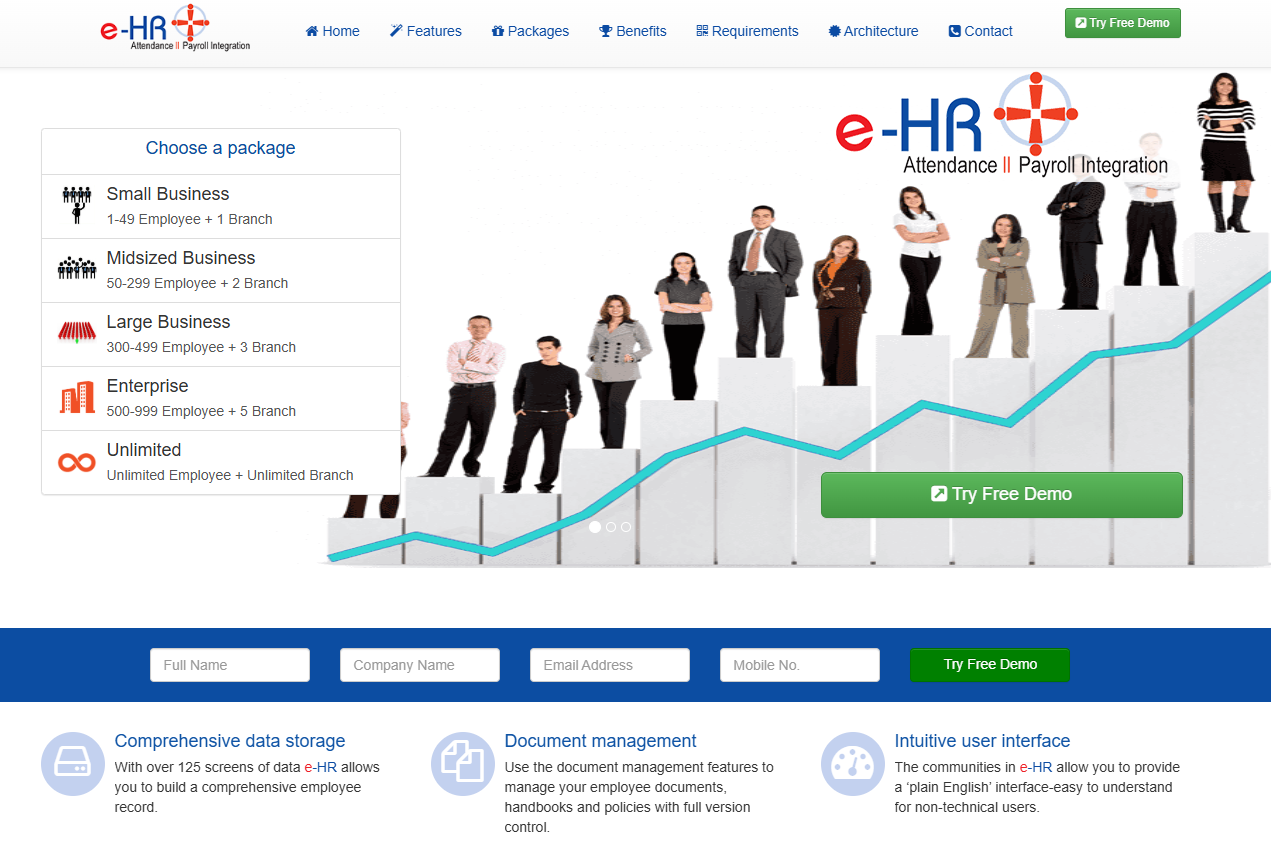
e-HR is a generic, cloud HR system that tries to cover the basics for organizations that want a simple interface and heavy self-service. It focuses on document control, reminders, email notifications, and scalable user loads. It’s more of an administrative tool than a full performance or analytics platform.
Best for
Companies that want a clean, simple HR tool without complex HR workflows. Good fit for organizations that rely heavily on document handling and employee self-service.
Key features
- Over 125 screens for detailed employee records
- Full document management with version control
- Self-service portal for employees and managers
- Email notifications and reminder triggers
- Simple browser-based access
- Date-trigger events for follow-ups
- Scalable architecture
- Role-based security
- No-installation cloud access
- Package options from small business to unlimited users
10. HRMThread Overview
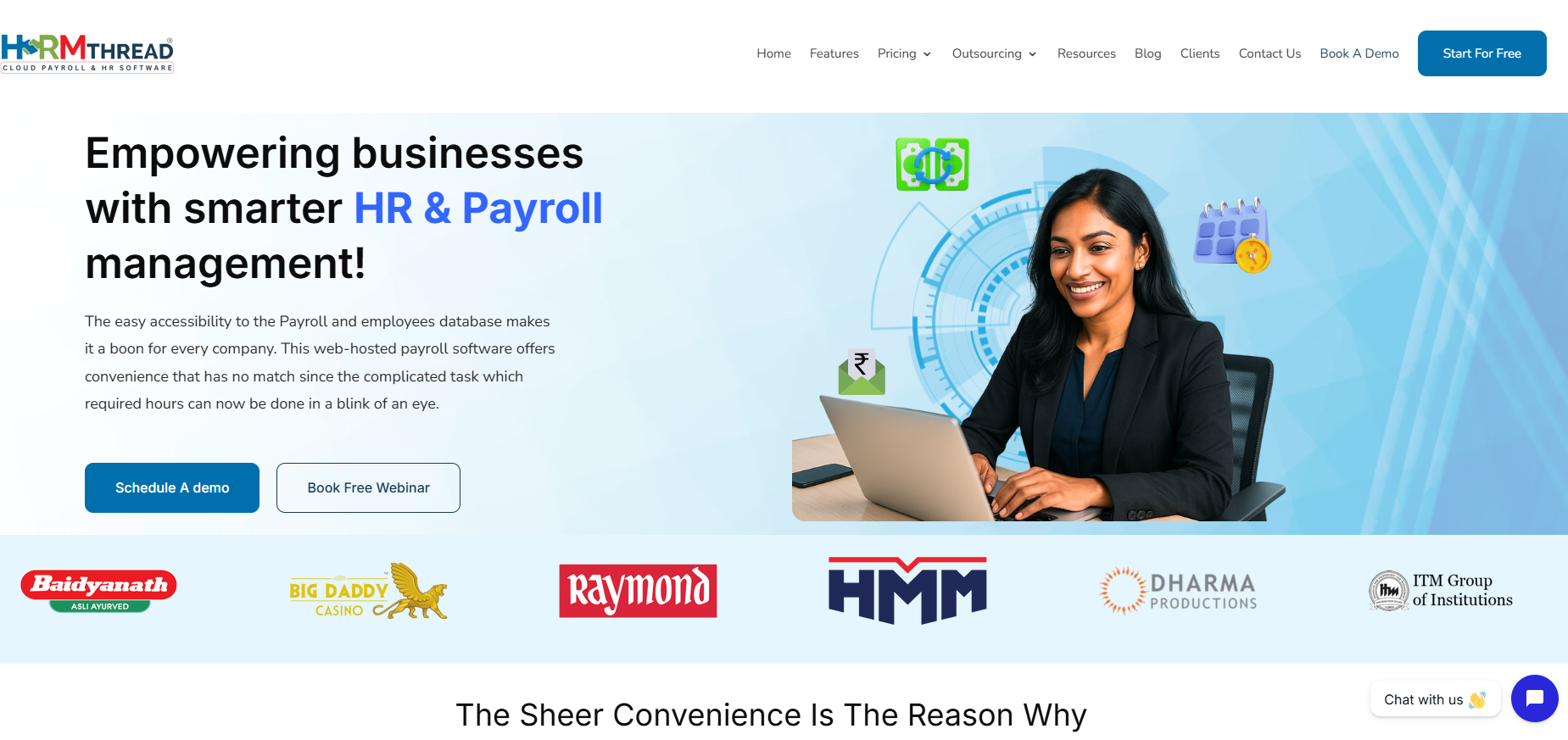
HRMThread is a cloud-based HR and payroll platform focused heavily on automation, compliance, and convenience. It markets itself as a time-saver and compliance guardian for organizations of all sizes, with a strong emphasis on payroll accuracy, statutory compliance, and employee self-service.
Best for
Businesses that want a ready-to-use, web-based payroll and HR system without heavy customization. Strong fit for companies that prioritize payroll automation, statutory compliance, and mobile access.
Key Features
- Core HR & Payroll: Employee records, automated payroll, tax compliance, exit settlements, loans/claims, travel management.
- Time & Attendance: Biometric and mobile check-ins, geo-fencing, timesheets, shift tracking.
- Employee Self-Service: Leave requests, payslips, tax forms, reimbursements, mobile access.
- Performance & Training: 360° appraisals, recruitment management, training tracking.
- Compliance & Security: Auto statutory filings, government portal integration, secure payroll, audit trails, scalable for all business sizes.
How to Choose the Right HRMS for Your Company
Choosing the right HRMS in Nepal is not just about picking the software with the most features. It’s about finding a system that actually fits your company’s needs and makes HR work easier. Here are the key factors to consider:
1. Know Your Team Size
The number of employees affects which HRMS will work best. Small teams may only need basic attendance, leave management, and payroll. Larger teams need modules for performance tracking, shift planning, and detailed reporting. Picking a system that is too complex for a small team wastes time and money, while a system that is too simple for a large team won’t scale.
2. Understand Your Payroll Complexity
Payroll is often the hardest HR task. If your company has overtime, bonuses, multiple allowances, or commission structures, you need an HRMS that handles all of these automatically. Otherwise, HR staff spend hours manually adjusting salaries, which increases errors.
3. Check Local Compliance
Labor laws, tax rules, and leave policies in Nepal must be reflected in your HRMS. Choosing software without local compliance can cause penalties, mistakes in tax reporting, or employee dissatisfaction. Make sure the HRMS supports Nepali regulations and is updated whenever rules change.
4. Evaluate Support and Training
A system is only as good as the support behind it. Look for HRMS providers with fast local support, onboarding help, and tutorials. This ensures your team can start using the software quickly and reduces mistakes caused by confusion or misuse.
5. Mobile and Remote Access
Most employees in Nepal prefer mobile access to check attendance, apply for leave, or view salary slips. A cloud-based HRMS with mobile apps makes these tasks easy for both HR and employees. It also helps companies with remote teams or multiple office locations stay connected.
6. Consider Integration with Existing Systems
If you already use accounting, ERP, or time-tracking tools, check if the HRMS can integrate with them. Integration saves manual work, reduces errors, and makes reporting faster and more accurate.
Choosing the right HR software Nepal businesses trust means focusing on what solves daily HR challenges, not just what looks modern or flashy. The right system reduces errors, saves time, and helps HR focus on meaningful work instead of paperwork.
Common Mistakes Nepali Companies Make When Buying HRMS
Even with the best HRMS options available in Nepal, many companies make avoidable mistakes that reduce the software’s value. Learning from these errors can save time, money, and frustration.
1. Choosing Only Based on Price
Many businesses pick the cheapest HRMS without considering features or support. A low-cost system may lack important modules like payroll automation, leave management, or mobile access. This often leads to hidden costs from extra work or errors.
2. Ignoring Local Compliance
Nepali labor laws, tax rules, and leave policies must be supported. Choosing an HRMS without local compliance features creates headaches for HR and increases the risk of penalties.
3. Skipping Employee Training
Even the best system fails if employees don’t know how to use it. Some companies assume HR staff and employees will figure it out. Providing training and tutorials ensures smooth adoption.
4. Overlooking Mobile Access
Most employees in Nepal prefer mobile-friendly systems. Ignoring this feature reduces usage, slows approval processes, and increases manual follow-ups.
5. Failing to Plan for Scaling
A small HRMS may work for a handful of employees, but as your company grows, you may outgrow it quickly. Not thinking about scalability means you’ll need another system sooner, which is expensive and disruptive.
6. Choosing Software Without Proper Support
Good local support saves hours when issues arise. Companies often underestimate the value of responsive support and struggle to resolve errors quickly.
7. Not Checking Integration
HRMS often needs to work with payroll, accounting, or ERP systems. Choosing one without integration options leads to duplicate work and errors.
Avoiding these mistakes ensures your HRMS works as intended, saves time, and improves efficiency. The goal is to find the best HRMS software for Nepali business to handle daily HR tasks without adding more complexity.
HRMS Pricing in Nepal
Pricing is often the first question business owners ask, but it’s important to match cost with value. HRMS prices in Nepal vary depending on features, team size, and support. Here’s a simple breakdown:
1. Small Businesses (Up to 50 Employees)
For small teams, basic HRMS plans start around NPR 5,000–15,000 per month. These usually include attendance tracking, leave management, and basic payroll. Small companies save time without paying for features they don’t need.
2. Medium Businesses (50–200 Employees)
Medium-sized companies require more advanced payroll, performance tracking, and reporting. Pricing typically ranges from NPR 15,000–35,000 per month, depending on modules and number of users.
3. Large Businesses (200+ Employees)
Large companies need full HRMS features, including shift planning, advanced analytics, and integrations with other systems. Monthly plans can range from NPR 35,000–70,000 or more, depending on complexity and support.
Tips to Keep Costs Manageable:
- Compare features vs. price, don’t pick the cheapest blindly
- Check for hidden fees like setup, training, or extra modules
- Consider cloud-based HRMS for lower upfront costs
Understanding pricing helps you choose an HRMS software that matches your company’s size and needs without overspending. The goal is to invest in best and budget friendly HR software in Nepal, not just the cheapest option.
Who Should Avoid HRMS Software?
Not every company in Nepal needs a full HRMS. Buying software unnecessarily can waste money and create extra work. Here are cases where HRMS might not be the right choice:
1. Very Small Teams
Companies with fewer than 5–10 employees often don’t need complex HR systems. Simple spreadsheets or basic payroll software can handle attendance, leave, and salary efficiently.
2. Companies Without Digital Readiness
If your team isn’t comfortable with computers or mobile tools, adopting an HRMS can create confusion instead of solving problems. Some training may help, but lack of digital readiness is a real barrier.
3. Businesses With Simple Payroll and HR Needs
If payroll is fixed, leave is minimal, and performance tracking isn’t needed, an HRMS may be more than necessary. Paying for features you don’t use is wasteful.
4. Companies Looking Only for Prestige
Some leaders buy HRMS just to look modern without understanding its purpose. Software should solve real HR problems, not act as a badge of sophistication.
For businesses that don’t fit these categories, investing in the best HRMS software in Nepal can save time, reduce errors, and improve efficiency. Knowing when NOT to buy shows better decision-making than blindly following trends.
Final Thoughts
Choosing the right HRMS in Nepal can transform how your business handles HR tasks. From attendance tracking to payroll, leave management, and performance monitoring, the right system reduces errors and saves time.
Remember these key points:
- Focus on features that solve real HR challenges, not just fancy modules
- Check local compliance, mobile access, and support quality
- Match the HRMS to your company size and workflow
Investing in HR software in Nepal is not just about convenience; it’s about efficiency, accuracy, and happier employees. Start by evaluating your team’s needs, comparing reliable HRMS in Nepal options, and selecting the best HR management system that grows with your business.
The right choice today can prevent HR headaches tomorrow.
Related insights
-in-Business_1763716856557-585605410_2025-11-21.png&w=3840&q=75)
The Rise of Virtual and Augmented Reality (VR/AR) in Business
21 Nov 2025

Choosing the Right E-Commerce Platform for Your Nepal-Based Business
21 Nov 2025

The Evolution of Software Development: A Journey Through Time
19 Dec 2025
Have a project in mind? Let's build something great.
Share your ideas or questions and our experts will get back to you shortly.
Unlock Expert Guidance
Need expert IT advice? Our seasoned professionals are here to help you navigate your tech challenges. Schedule a session with us and get personalized solutions tailored to your business needs.

Connect with Us and Let's Build Something Together
We'd love to hear from you! Whether you have questions, need support, or want to discuss a new project, our team is ready to assist. Fill out the form below, and we’ll get back to you as soon as possible.
Prefer a Direct Consultation?
Connect with our team for a 1-on-1 virtual session to discuss your project, understand your needs, and explore the right solution for your business.
What's Next?
- 1Connect with you at a convenient time
- 2Explore your needs, goals, and requirements
- 3Prepare a tailored proposal based on your needs
Why Choose Us
Connect with AITC
Select your inquiry type to route your request to the right department.
Our Office Locations
Operating across 3 key timezone hubs to serve global enterprise clients.